
Canada's Population Reversal: What Makes Rentals Tank, and Resales Hold?
Three straight quarters of population declines are rewriting the rules for Canadian landlords and homebuyers alike.

Population growth continues to course-correct following years of destructive policies under the Trudeau government. Allowing immigration (including temporary resident admissions) to hit a 1.2 million annual run rate at peak remains, I believe, the single greatest policy blunder of the past 50 years.
This irresponsible level of growth taxed social services and health care, strained housing affordability- notably in the rental market, pushed public infrastructure to its limits, and ultimately shattered what was a broad Canadian consensus on the benefits of a thoughtful immigration system.
We’re now course-correcting and unwinding some of the errors of that period…but we have a long way to go.
Below are some takeaways from the latest population data:
Record annual population decline in Q1
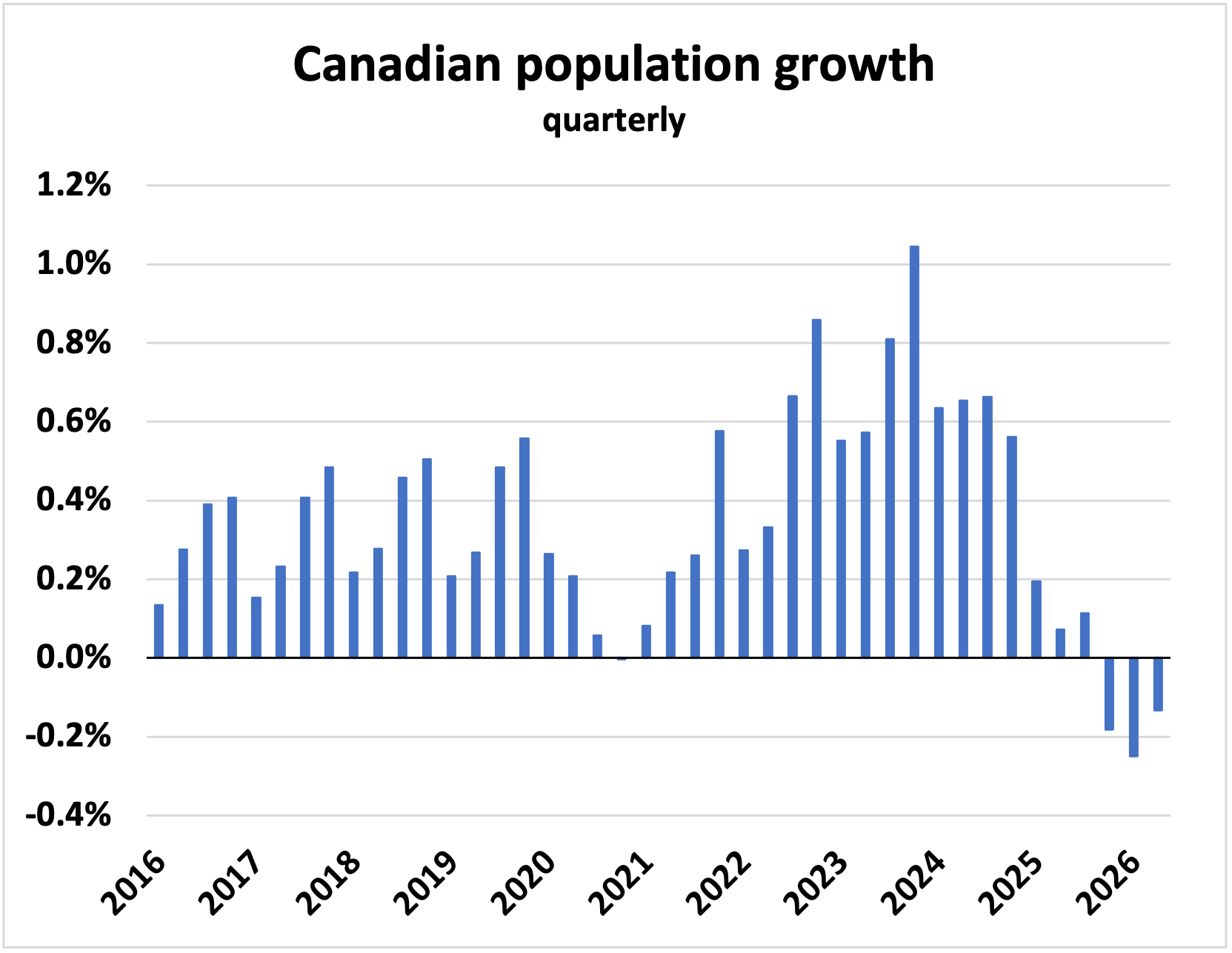
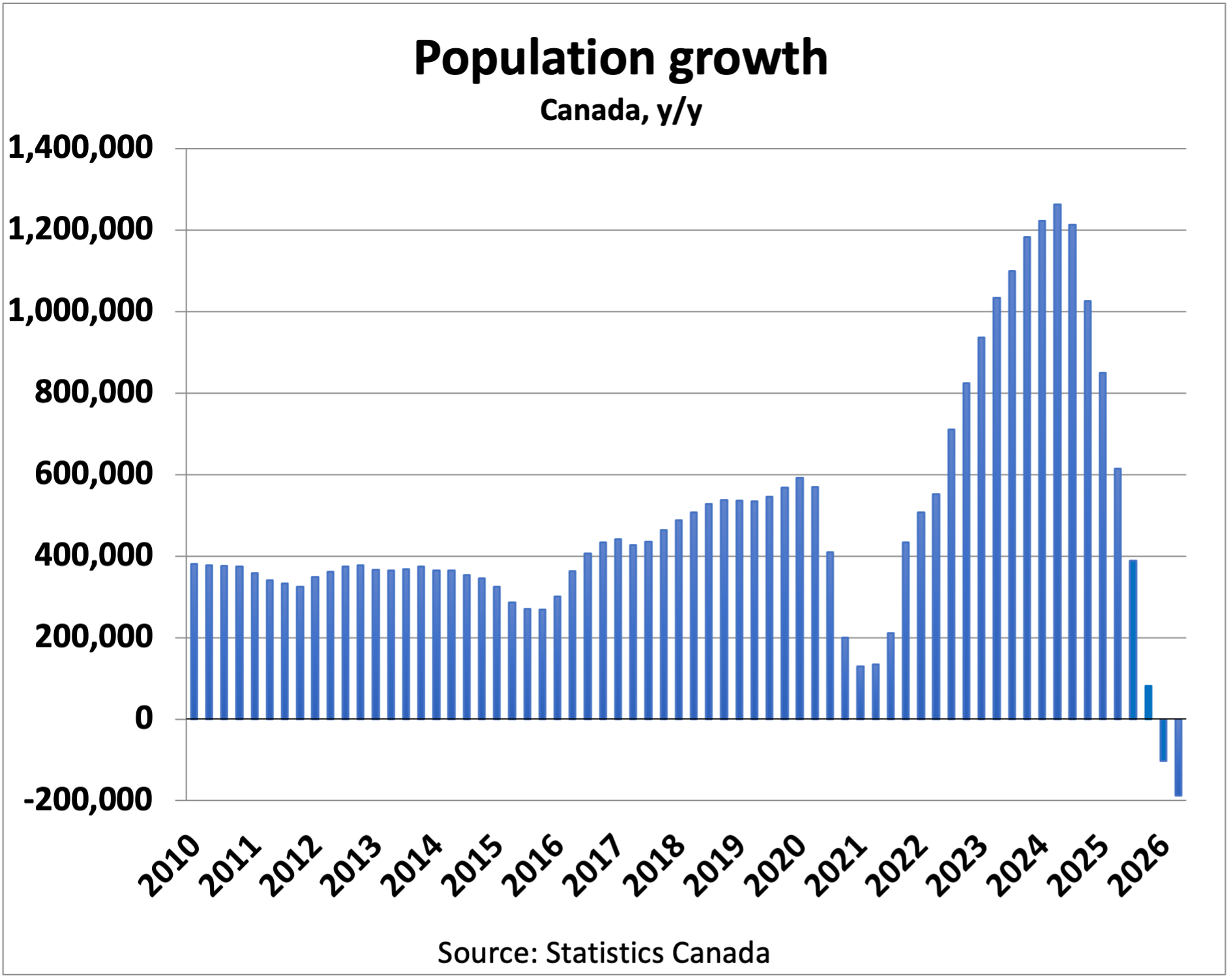
Canada’s population fell by an estimated 55,000 people (-0.1%) in Q1, bringing the annual growth rate to -187,000 or -0.5%. This represents the third consecutive quarterly decline following a string of 70 YEARS without a decline outside of Q4 2020 when the population dipped by a meaningless 1,000 people during the pandemic. These are truly unprecedented times for Canada.
Ontario, BC lead declines
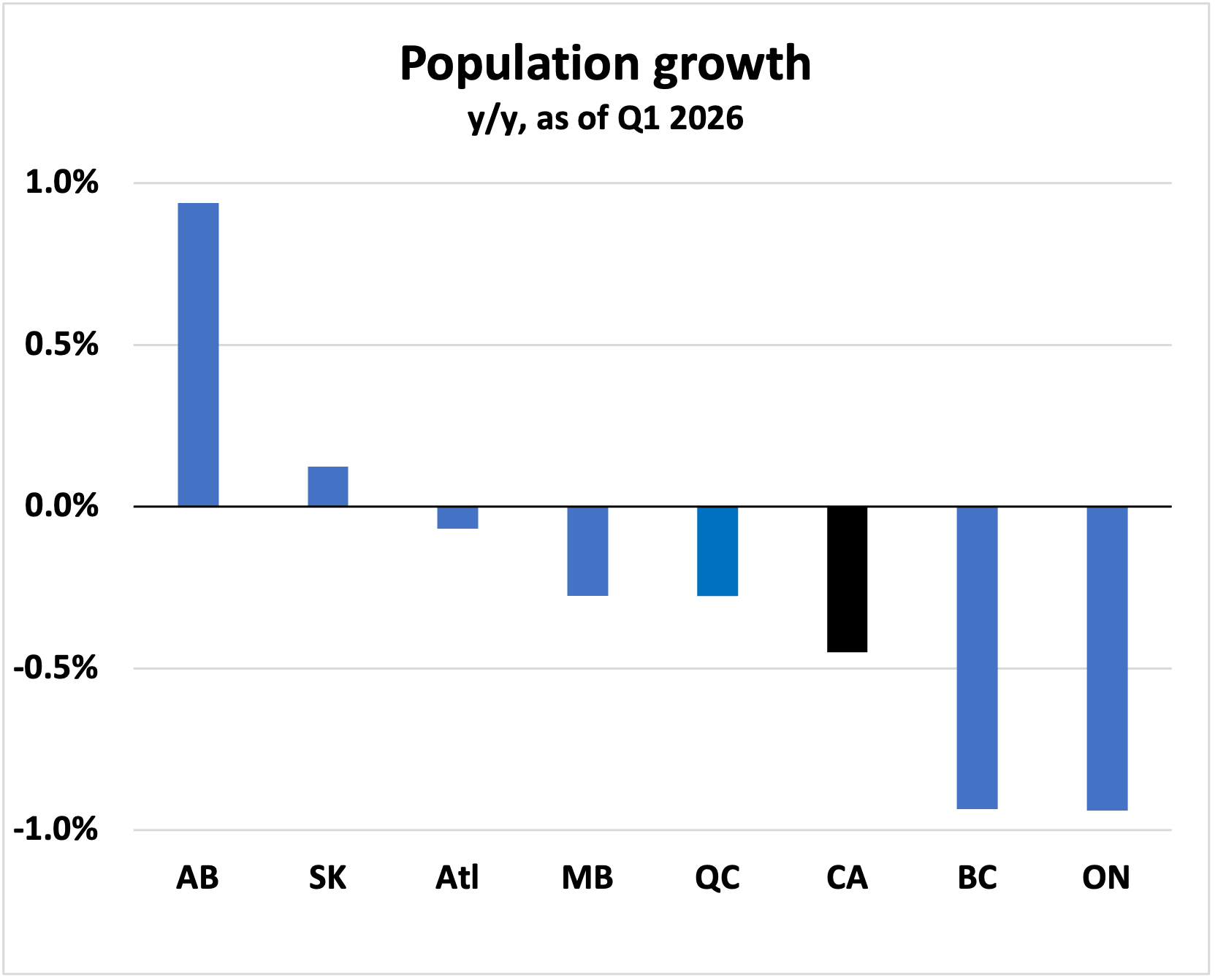
Alberta and Saskatchewan continue to hold onto positive population growth for now, but that’s it. Every other region is now seeing declining population on a y/y basis led by Ontario and BC (-0.9% each). Note that Atlantic Canada is now seeing population outflows, which will quickly take the steam out of their rental market given the looming wave of new supply.
NPRs cohort continues to shrink
The main driver of population declines was a 118k drop in non-permanent residents….primarily work and study permit holders. That cohort is now down by over half a million in the past year, accounting for the entirety of the headline population decline. This is a key renter cohort, so it’s no surprise that apartment REITs with considerable Ontario and BC exposure are seeing falling rents at turnover.
At the same time, the PERMANENT resident cohort grew by 300,000 in the past year. These are prospective future homeowners, reinforcing my view that negative population growth is far less “bad” for the resale market and much worse for rental demand than it would appear.
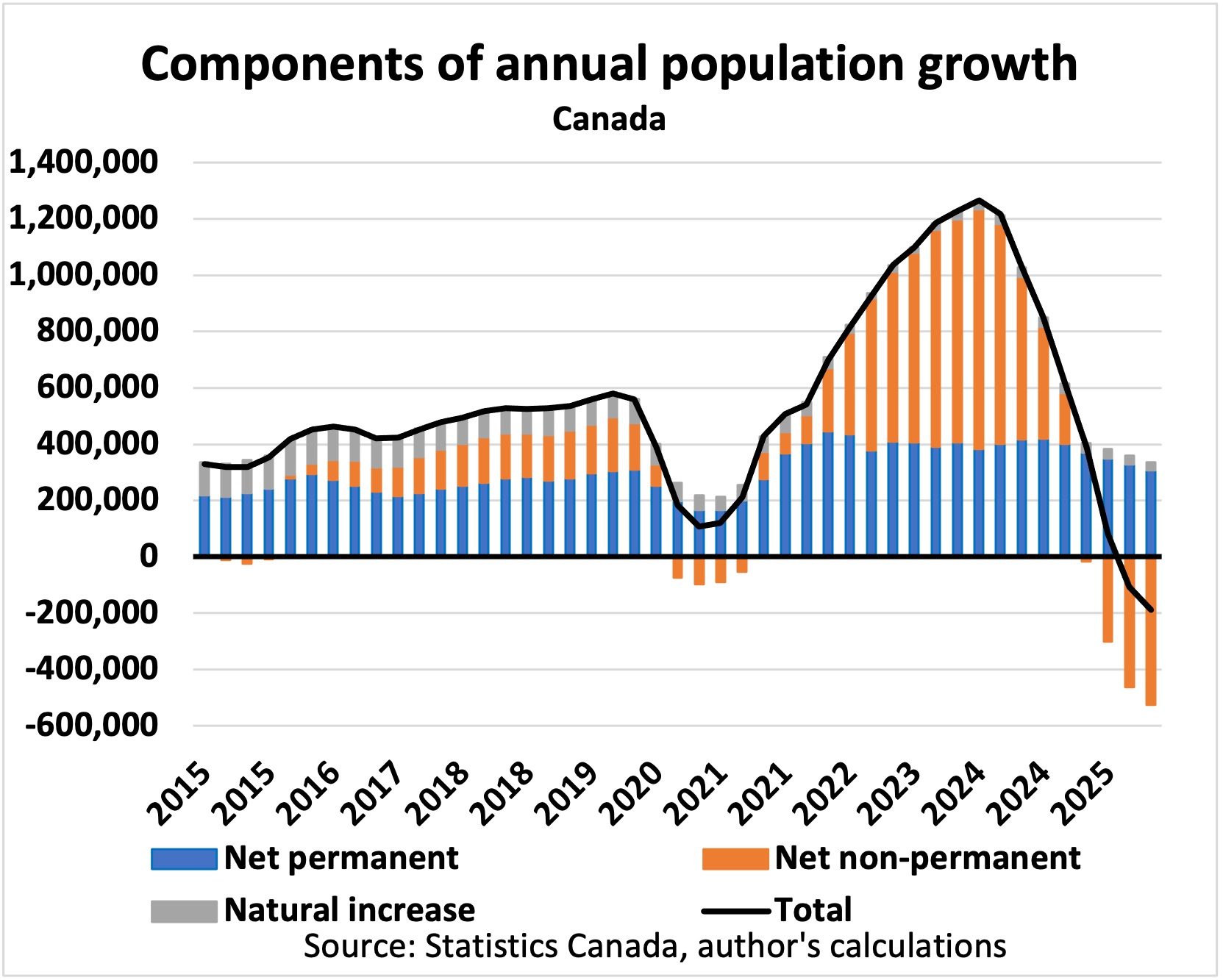
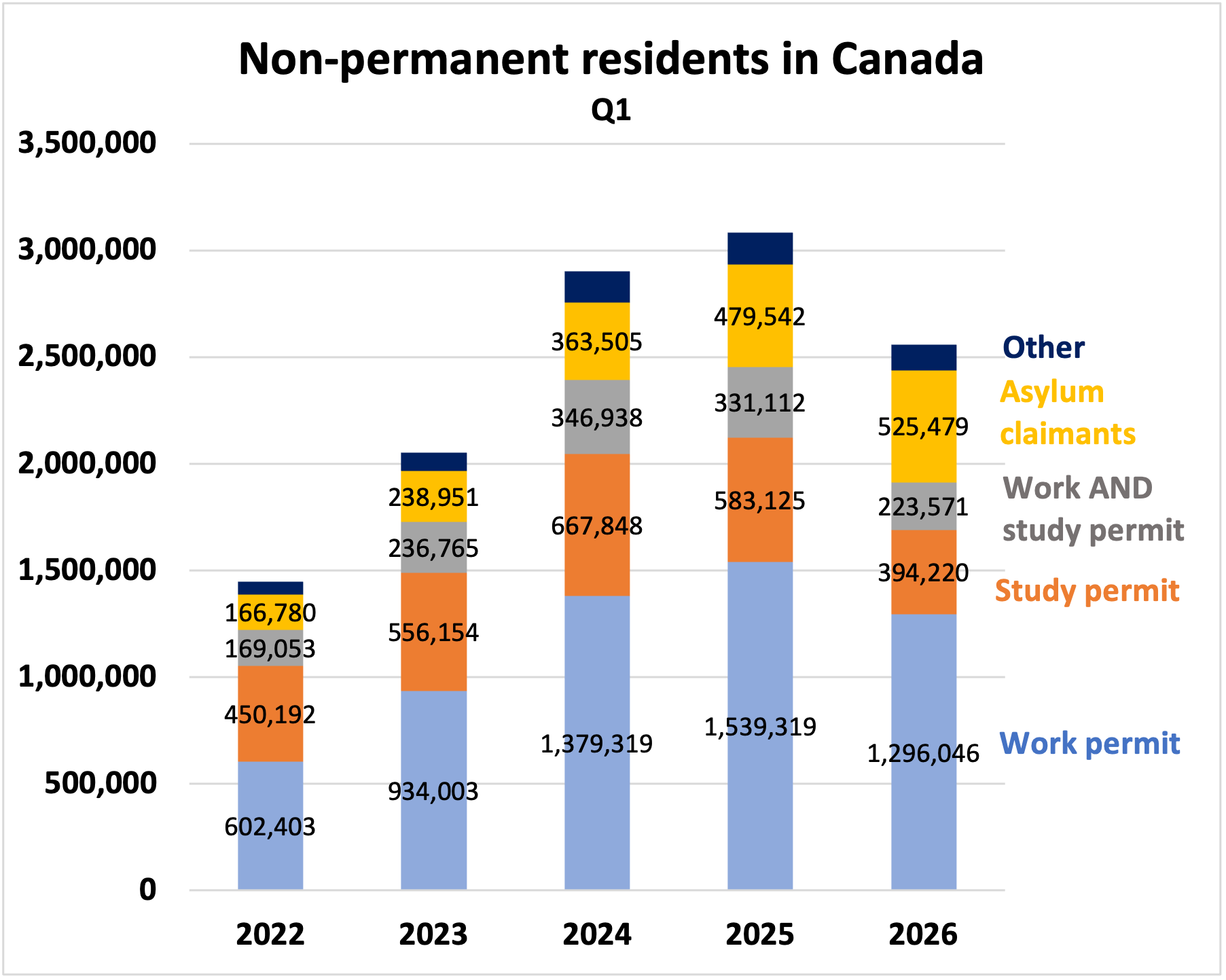
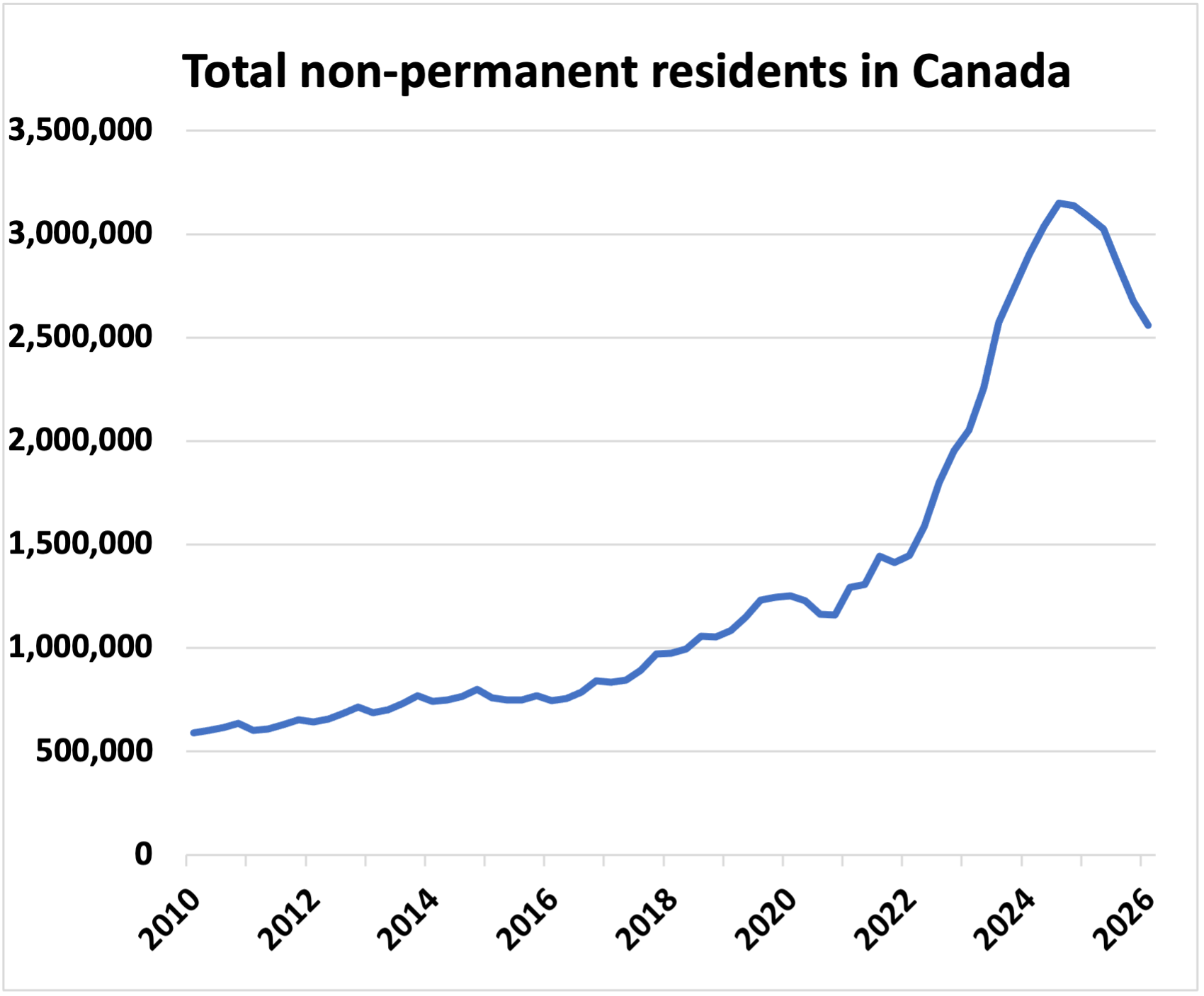
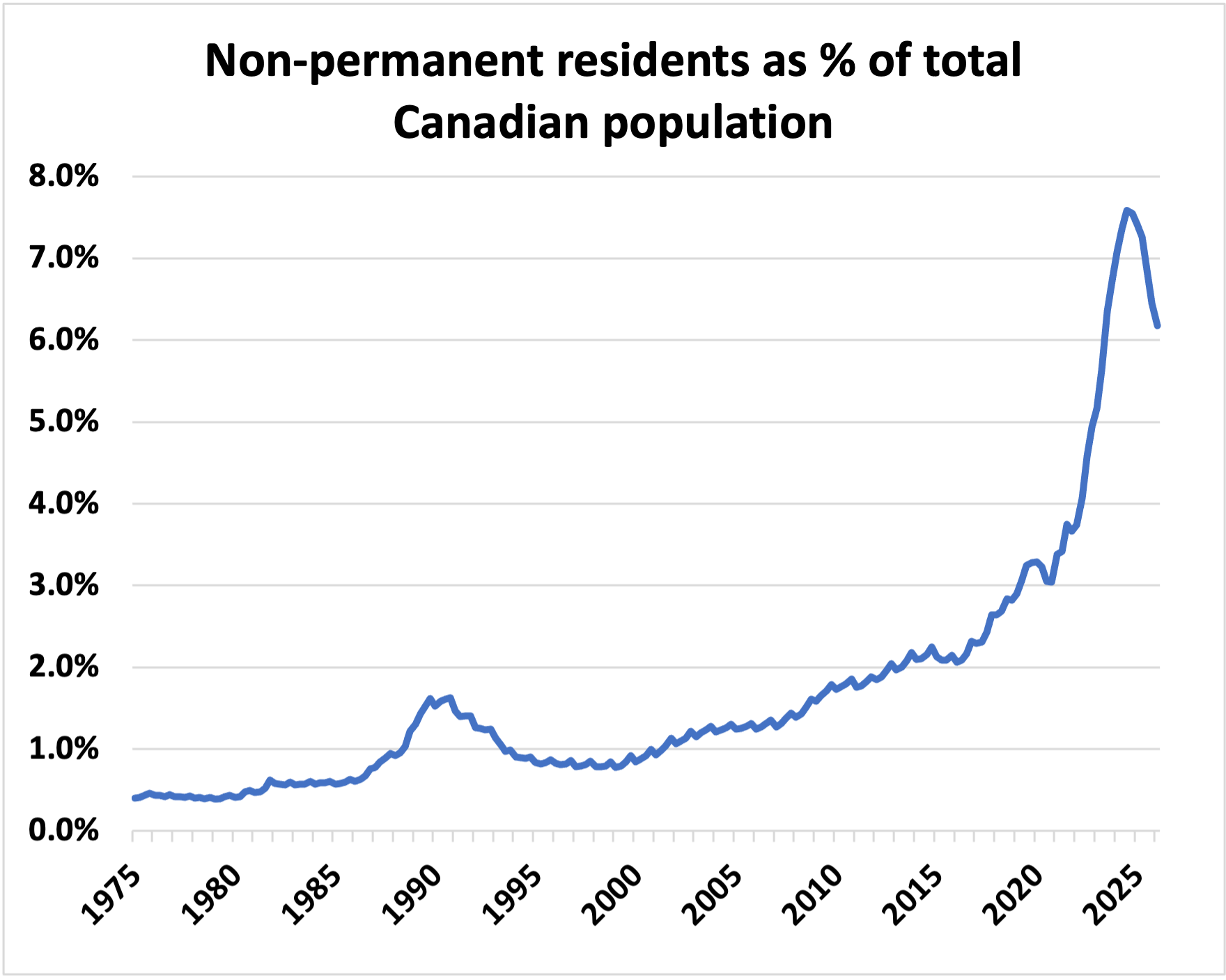
This trend of declining non-permanent residents will continue right through the year and into 2027 as the feds aim to reduce that cohort to 5% of the total population. There are currently over 2.5 million NPRs in the country representing 6.2% of the population or double what it was at the onset of the pandemic.
“But can we trust the data?”
Canada deserves criticism for its lack of exit tracking and weak enforcement against visa overstays. Those shortcomings have understandably raised questions about the reliability of the underlying data.
Fear not! We can triangulate with other real-world measures. I’ve tracked net cell phone additions at telcos for some time now, and they are very weak….as one might expect.
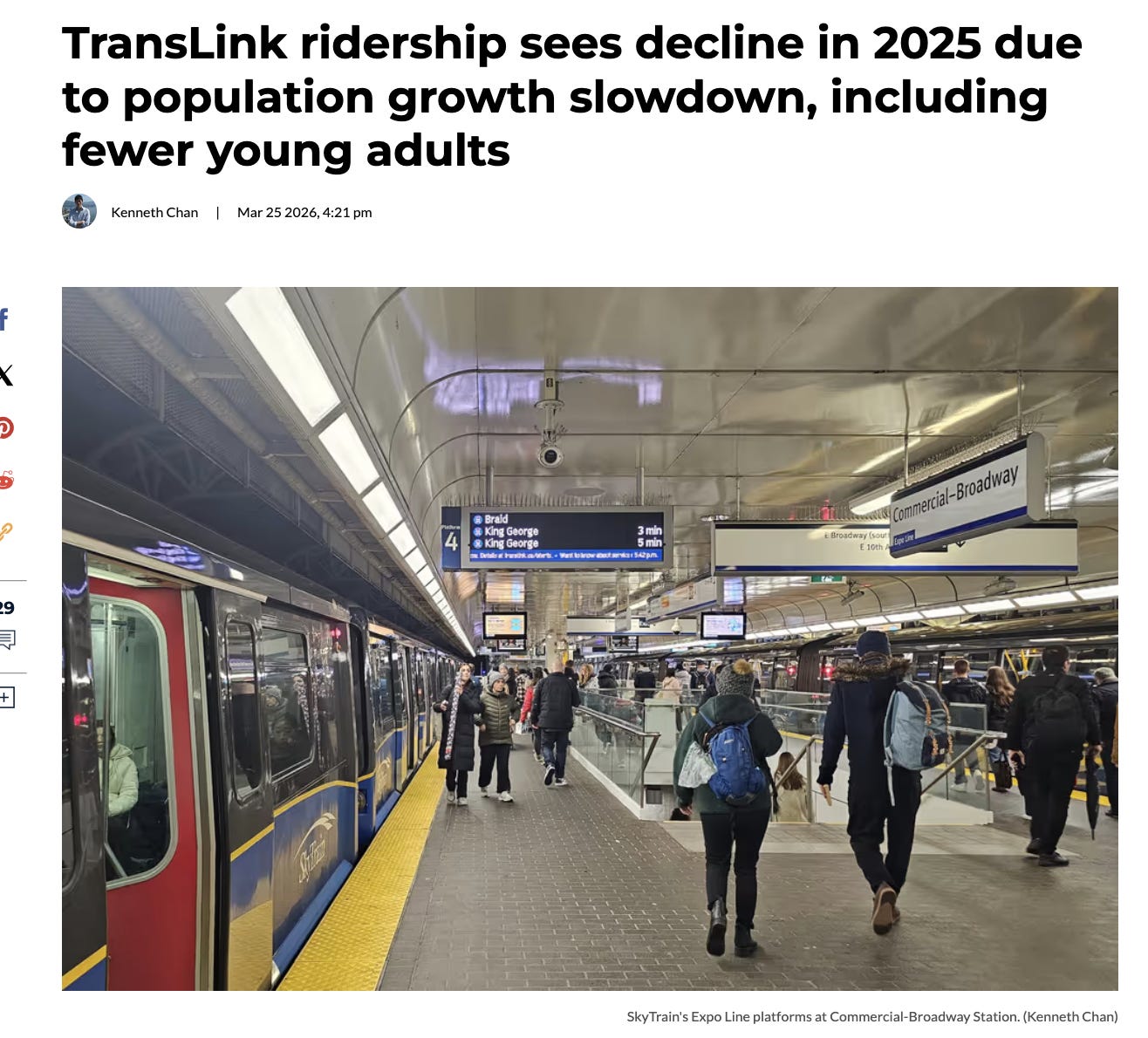
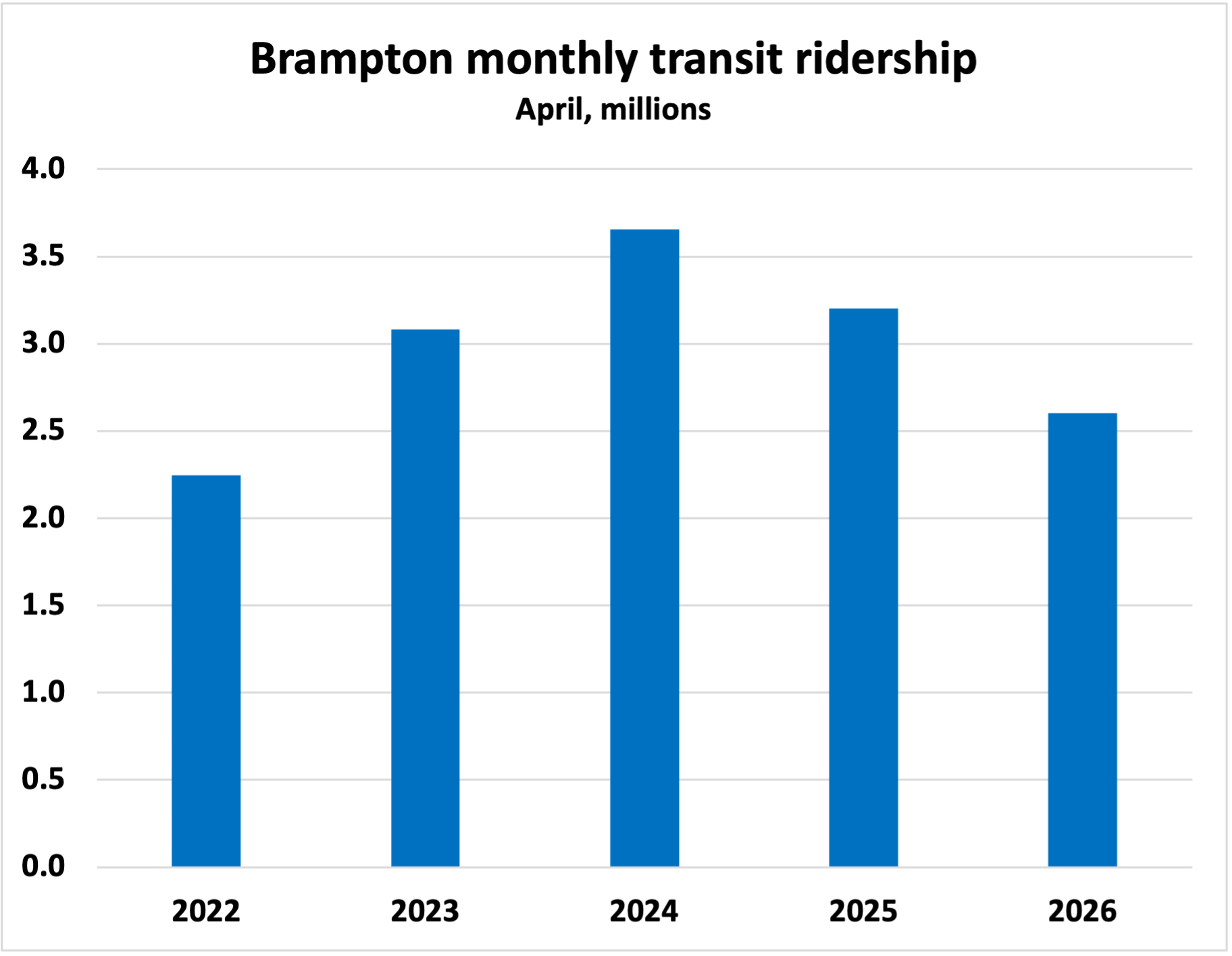
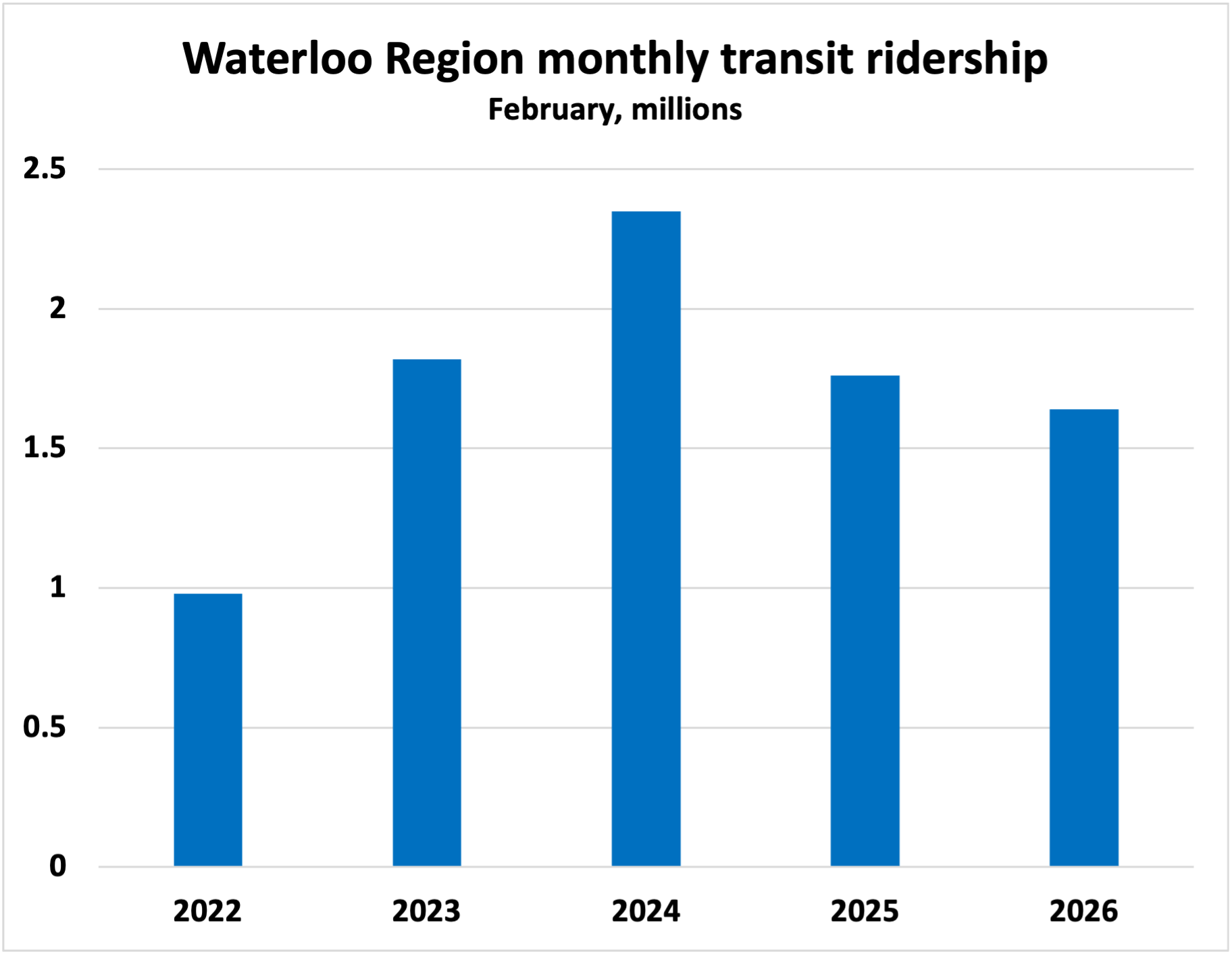
But transit ridership is perhaps a cleaner measure. Most temporary residents will use public transit, making this a pretty good proxy for population growth…at least directionally.
We know it’s falling across metro Vancouver. They don’t break down the trend by regional hubs but I would wager that Surrey is seeing the steepest decline:
We do have excellent monthly transit data from Brampton and the Waterloo Region (home to Conestoga College), two of the epicentres of Canada’s international student and temporary worker boom. The trend is unmistakable. In April, Brampton Transit ridership was down 18.7% y/y and nearly 30% below 2024 levels. Waterloo Region saw ridership decline 7.0% y/y and roughly 30% from its 2024 peak:
Interprovincial flows hammer Ontario
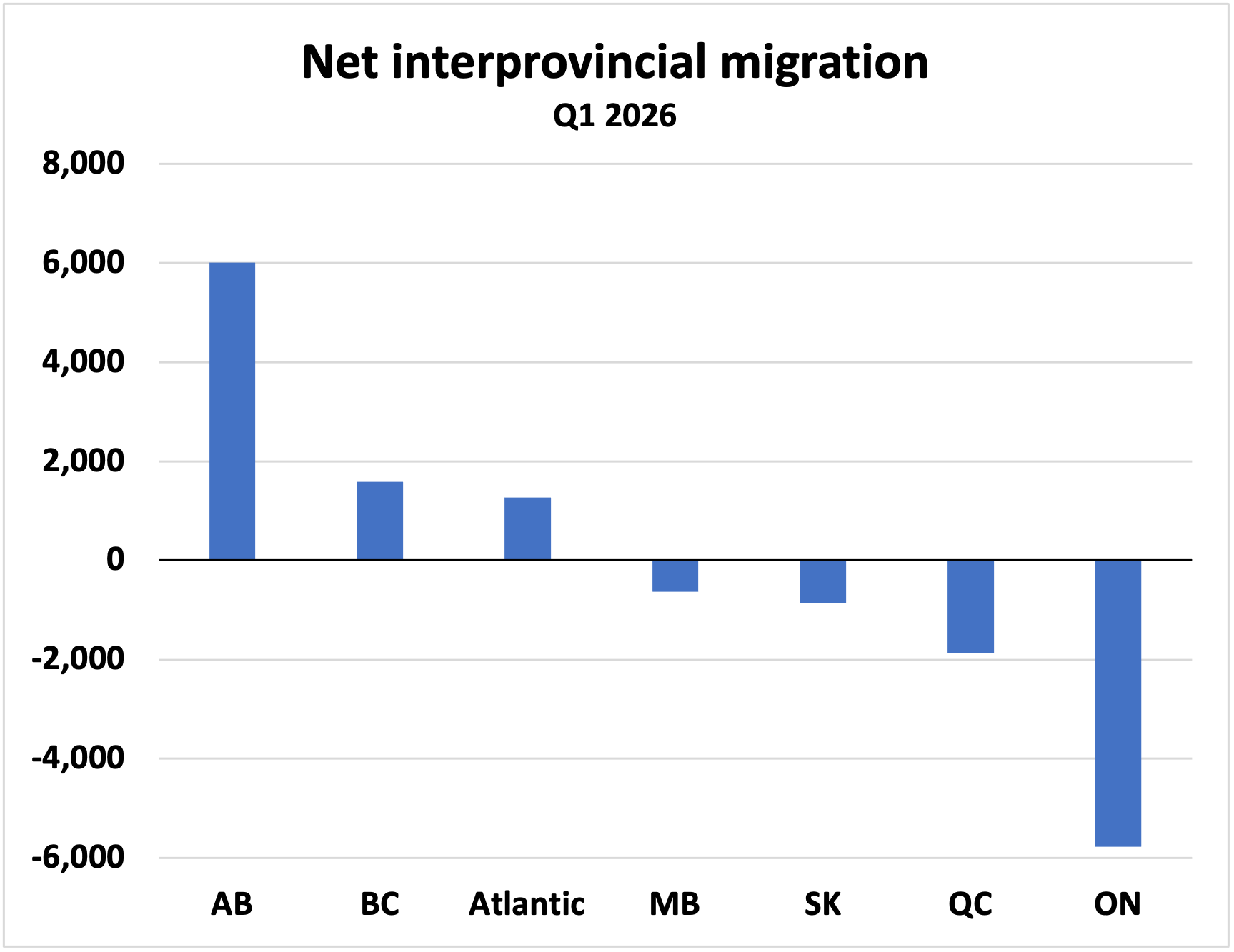
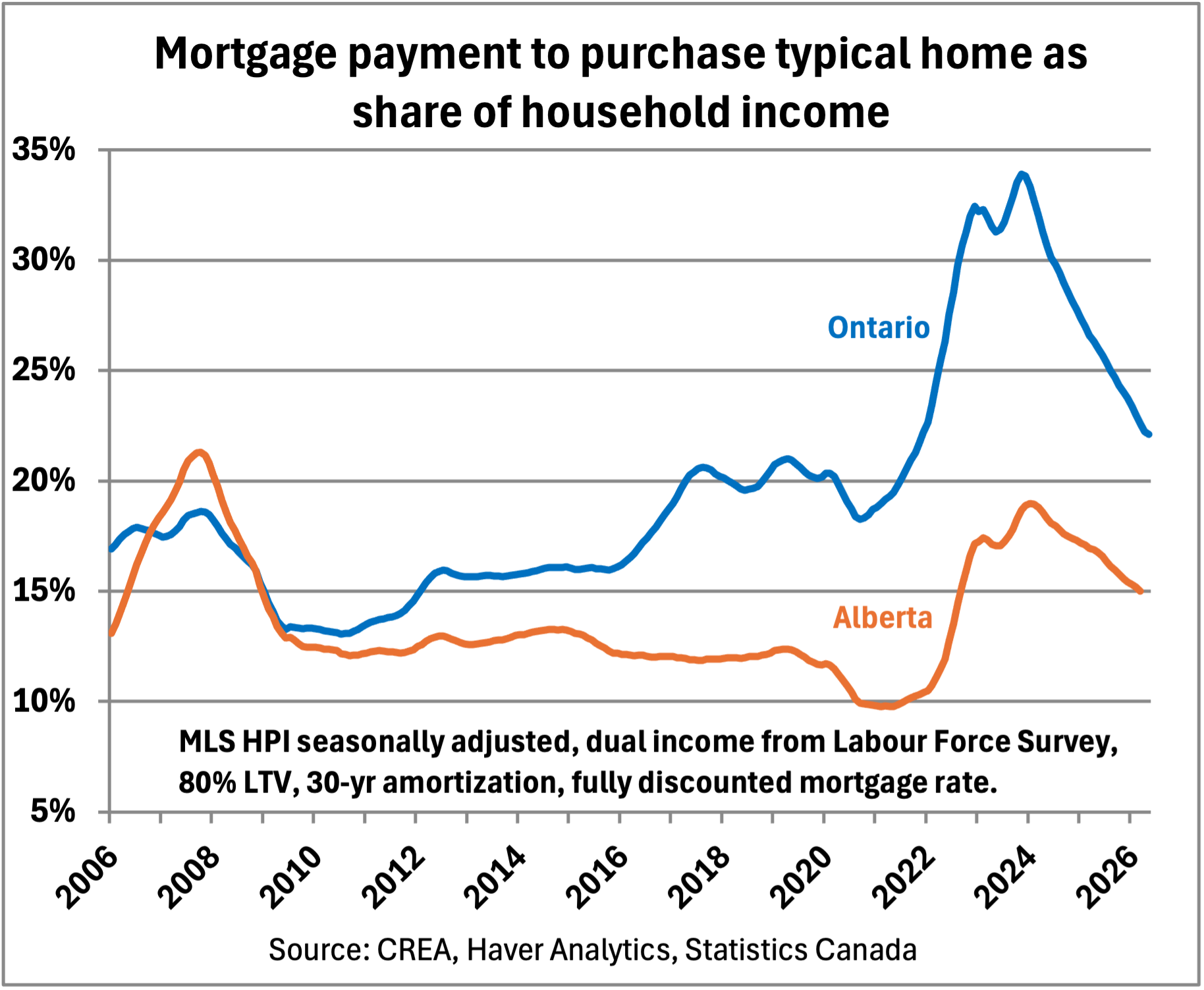
Canada’s largest province continues to lose population to the west and the Maritimes, with a net 6,000 people leaving in Q1. These trends will likely persist as Ontario struggles with a weak economy and uncertainty from US trade tensions while Alberta continues to see solid economic growth and much more affordable real estate prices for young workers:
Record number of Canadians also leaving the country
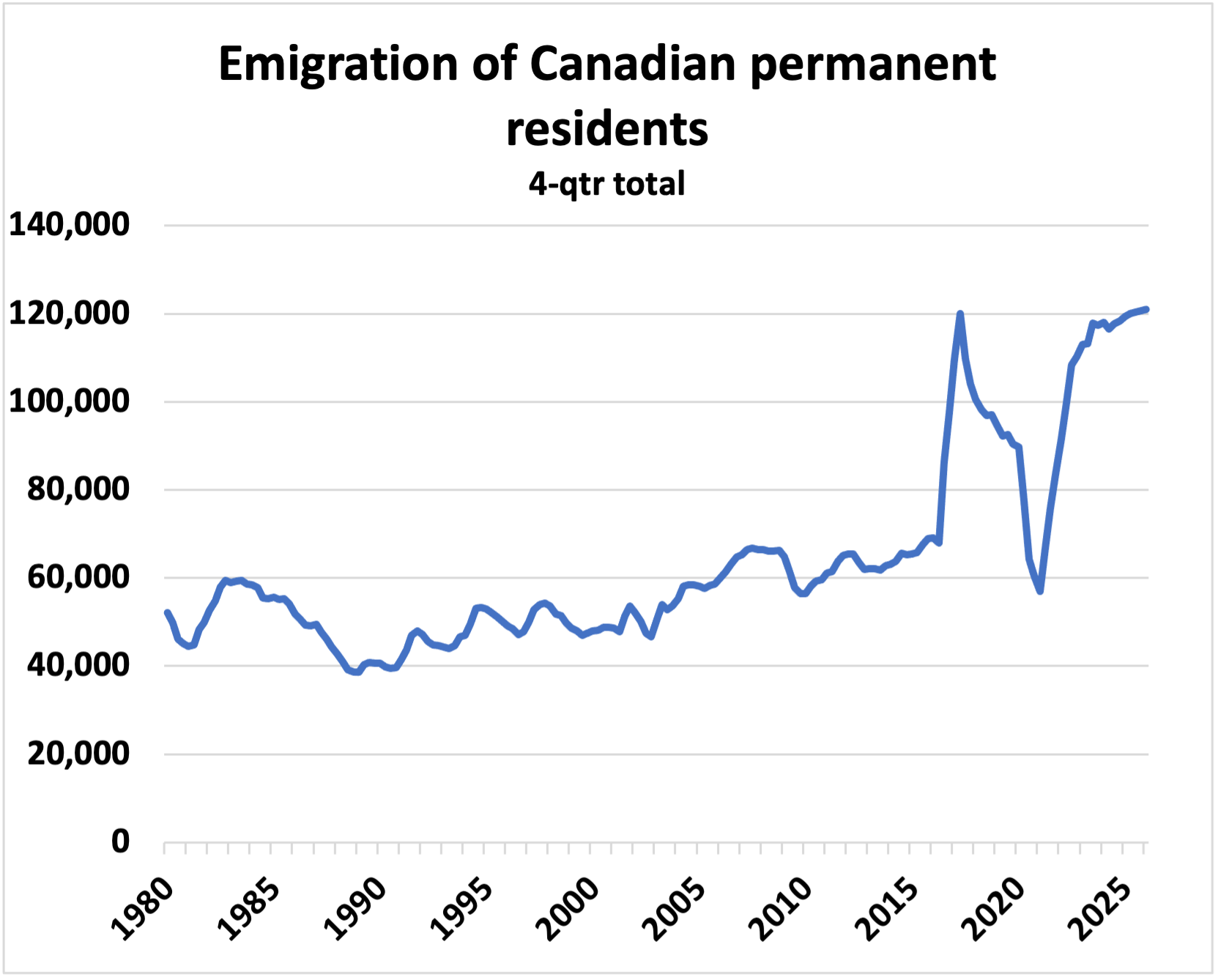
Further weighing on population growth is a record number of Canadians permanently leaving the country. As of Q1, over 120,000 Canadians emigrated out of the country in the past year. Note in the chart below that the “bump” in 2016-2017 was the result of a methodological change from Stats Canada that led to a temporary overstatement of exits:
Natural increase plunges as deaths rise
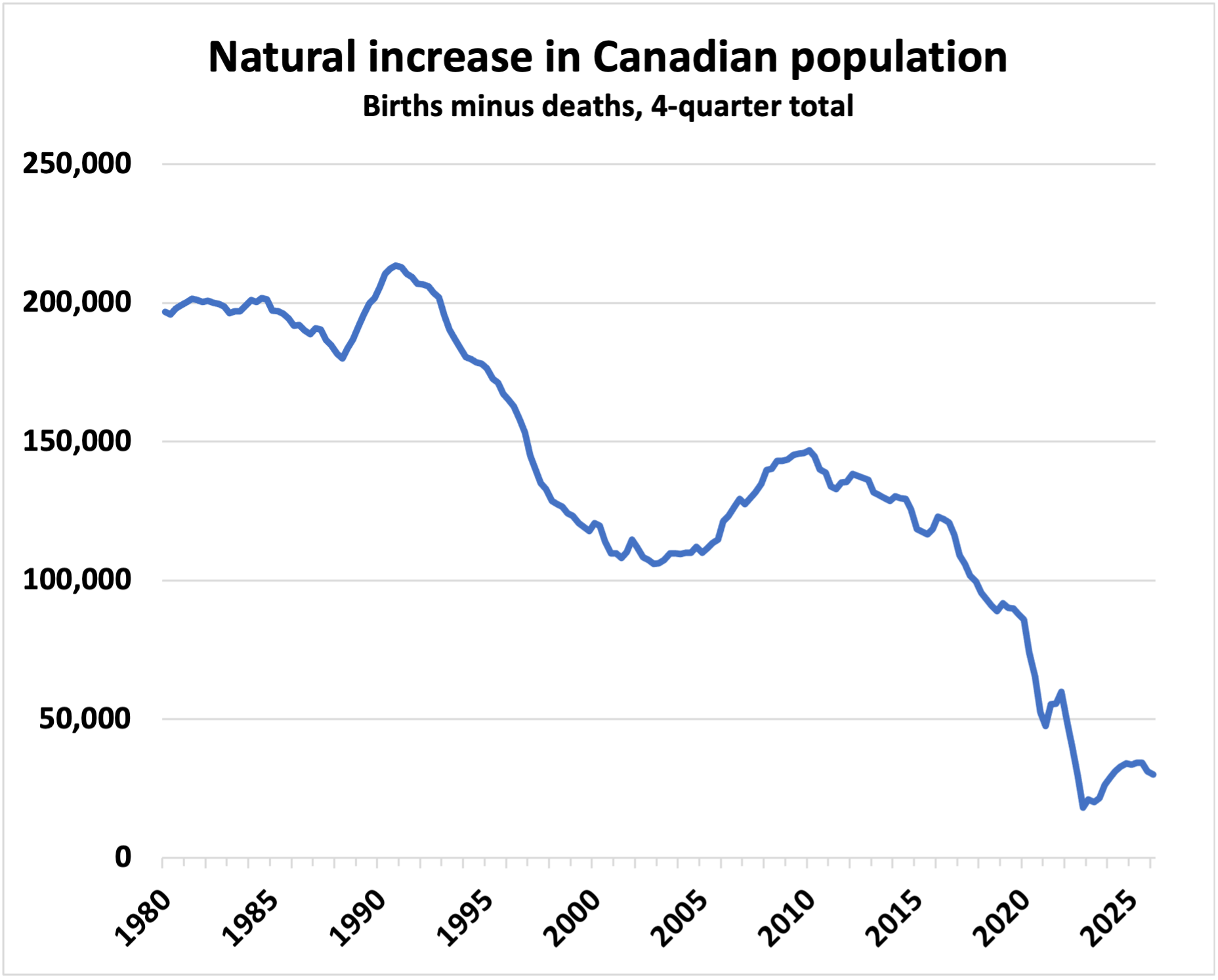
Back in 2010, the natural increase in Canada’s population was 150,000. Today it’s 1/5th of that. Absent immigration, Canada’s population would be rising a paltry 30,000 people annually….and that number is falling rapidly.
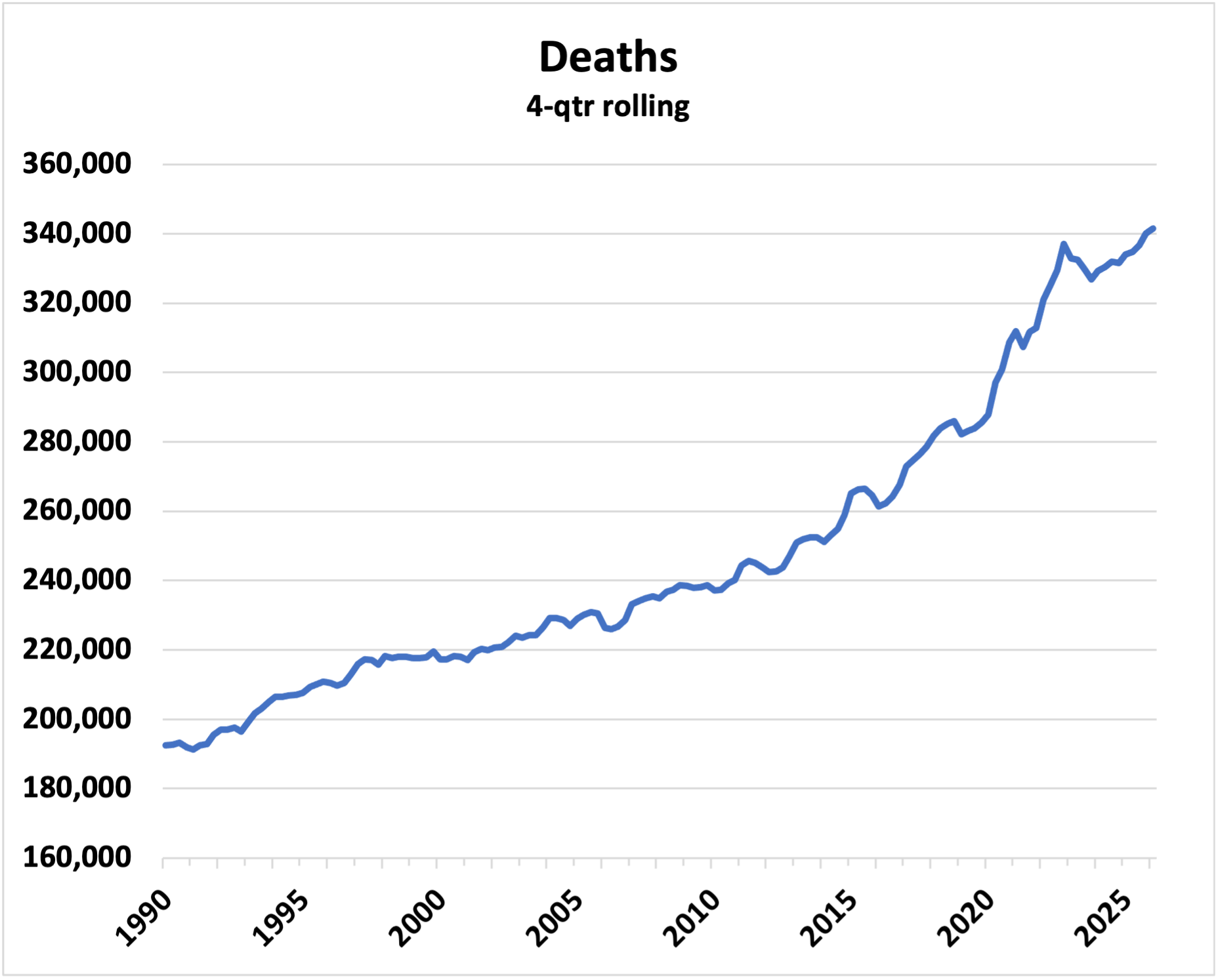
Yes, births are below peak, but not much. What is rising sharply are the number of deaths as Canada’s population continues to age.
This is one major headwind to Canadian housing over the next decade. The 2021 census showed that between 12 and 14% of detached homes in provinces like BC and Ontario were owned by homeowners who were over 75 at the time. Those who still own are now into their 80s. That’s a pile of supply set to change hands in coming years:
Asylum claimants continue to grow
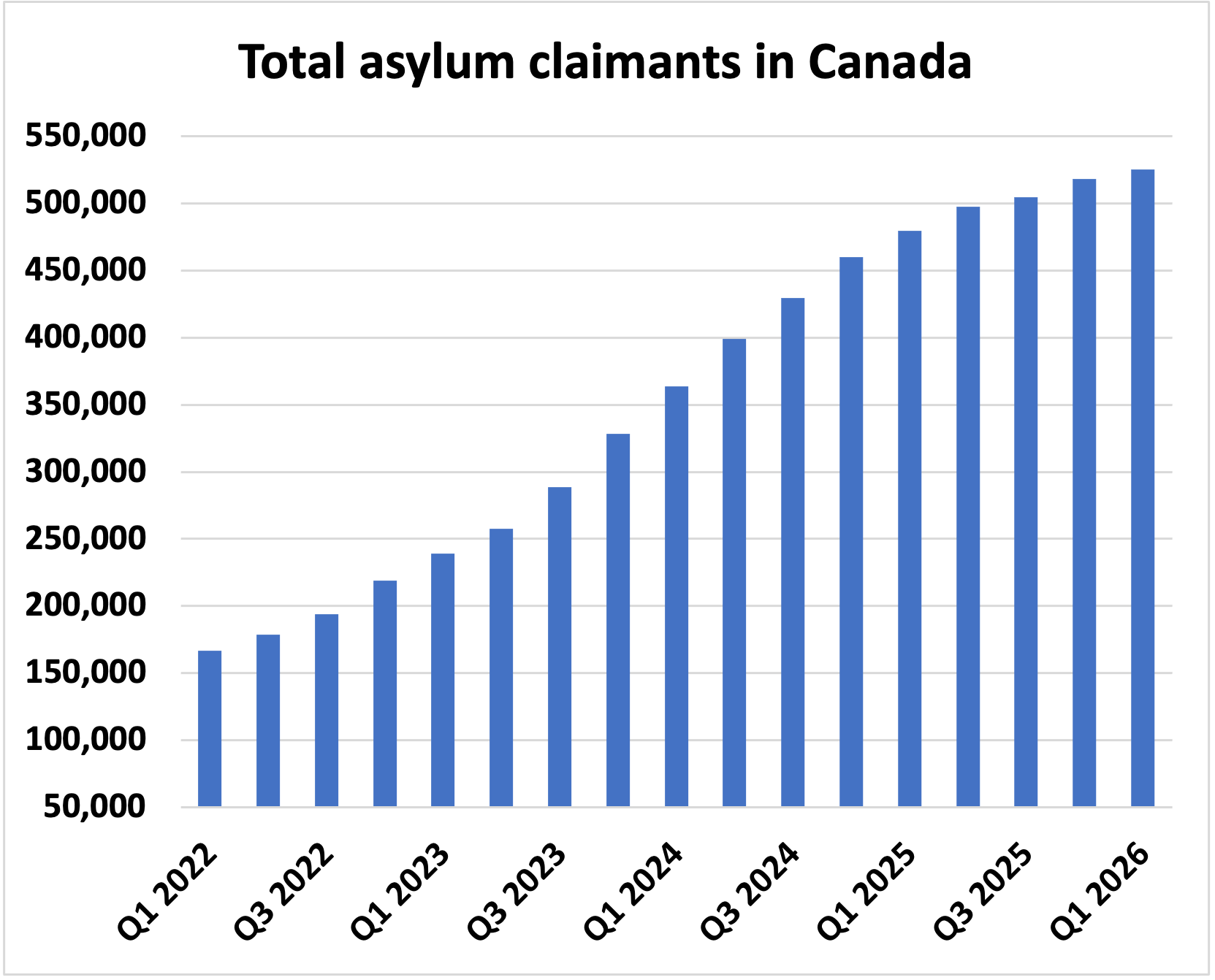
Rampant abuse of the asylum program continues. We now have 525,000 asylum claimants in the country, up 7k q/q, 46k y/y, and triple what it was in 2022. There is now 1 asylum claimant in the country for every 75 Canadians.
The program’s mandate is ostensibly to provide refuge to a select group of vulnerable individuals fleeing legitimate persecution. Instead it has morphed into something the government is now having a hard time controlling, and it remains a “back door” into Canada for all sorts of bad actors globally.
Governments move slowly but they do eventually get things right. This program will likely see major reforms likely later this year.
If there’s any doubt that this program is indeed being abused, consider that “inland” asylum claims from people already in the country as temporary residents exploded right as the feds began tightening temporary visa extensions.
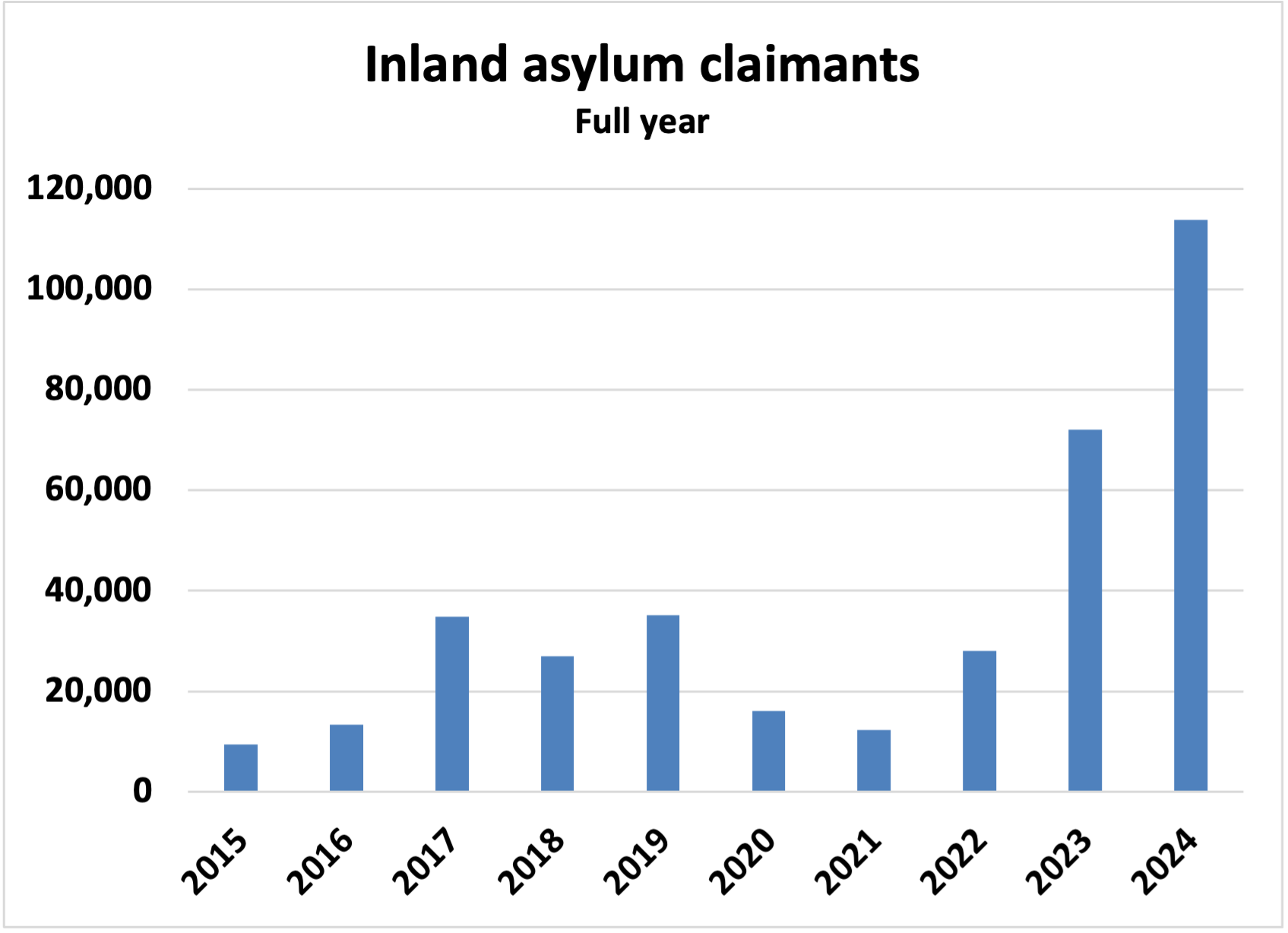
…and that’s to say nothing of the refugee program being used as a shield against deportation for foreign criminals. This is an absolute outrage that demands a total overhaul of the entire system:

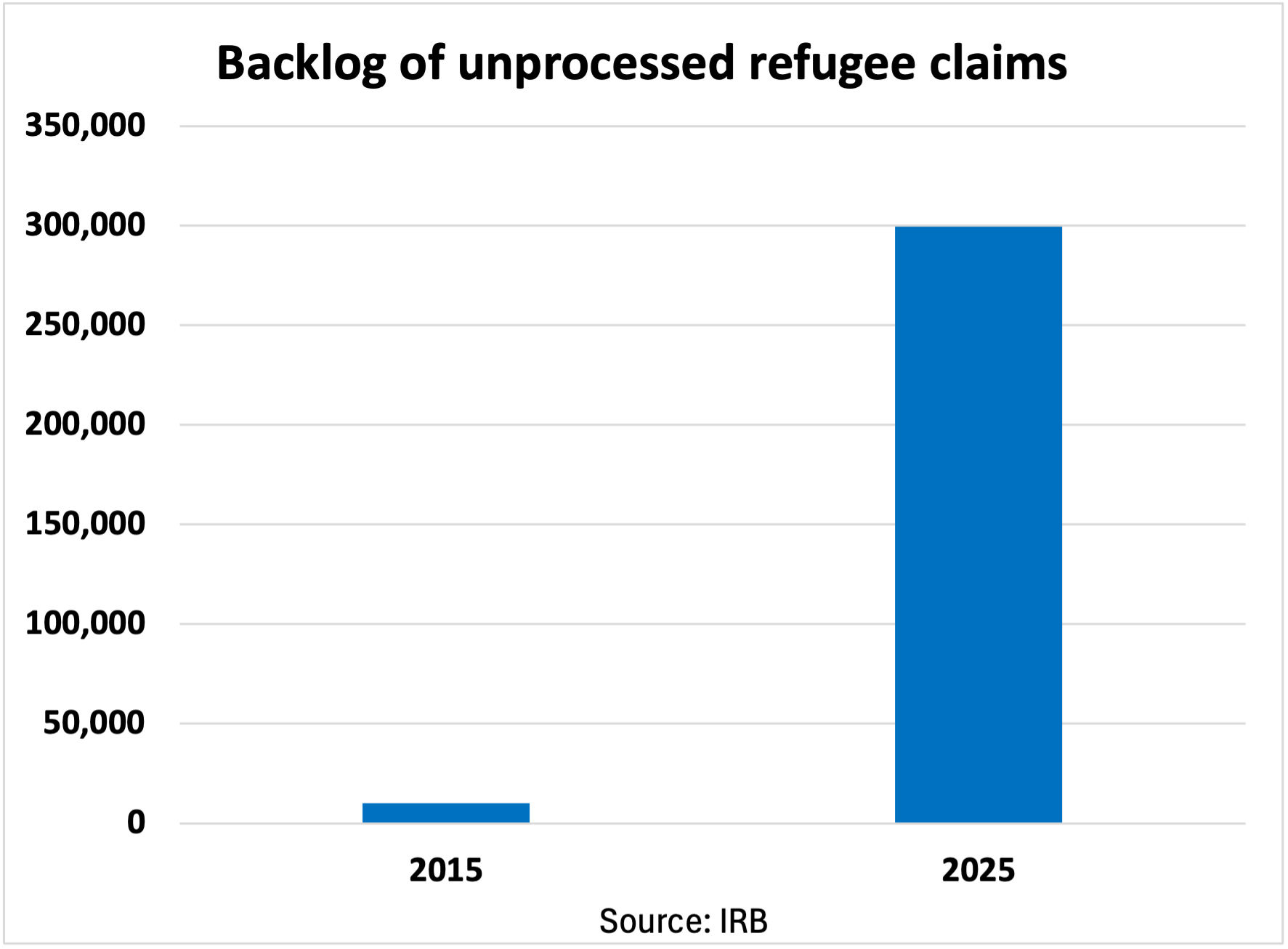
Your WTF of the week: Canada has a growing backlog of unprocessed refugee claims amounting to 300,000 at the end of 2025. A 2024 PBO report estimated the cost of processing each claim at $16,500. That’s $5 BILLION in costs to taxpayers even before accounting for assistance/support payments to those claimants. JUST processing expenses!
For context, $5B is enough to build 2-3 modern regional hospitals.
In summary:
We are still in the early days of a much-needed course correction on Canadian immigration policies. The abuses in the foreign worker and international student programs are being addressed….albeit not perfectly, but at least directionally.
In contrast, asylum programs remain an open door for abuse. I remain hopeful that the government will make necessary and long-overdue changes in short order to maintain what’s left of the integrity in the system.
~The 4th Amigo Ben Rabidoux.
For more Ben’s content & data, sign up for his weekly newsletter at www.edgeanalytics.ca
Further evidence of the structural damage that the Liberal party has done to Canada since 2015. Every Liberal MP, Floor crosseurs, and Liberal voters are responsible for the destruction of our wonderful country. Say it loud and say it clear - LIBERALS YOU DID THIS!!!
The idea of tracking mobile subscribers as a reality check on the poor tracking of exits was excellent.
I tried to come up some actual numbers and eventually discovered a joint CRTC & Stats Canada "Current trends - Mobile wireless", but it sadly only shows up to 4Q2025. It shows an increase to 38.23M from 37.73M in 2Q2025 (Carney was in power after the election by then) which is 1.3% increase. Hopefully the next quarters results will be published soon.