

Canada just discovered a few hundred thousand people.
Not hiding in the woods. Not behind the couch. Not stranded at Pearson Airport’s lost luggage counter.
They were here all along. Statistics Canada just hadn’t counted them properly.

That’s the big takeaway from the latest population revisions, which dramatically rewrote Canada’s recent demographic history.
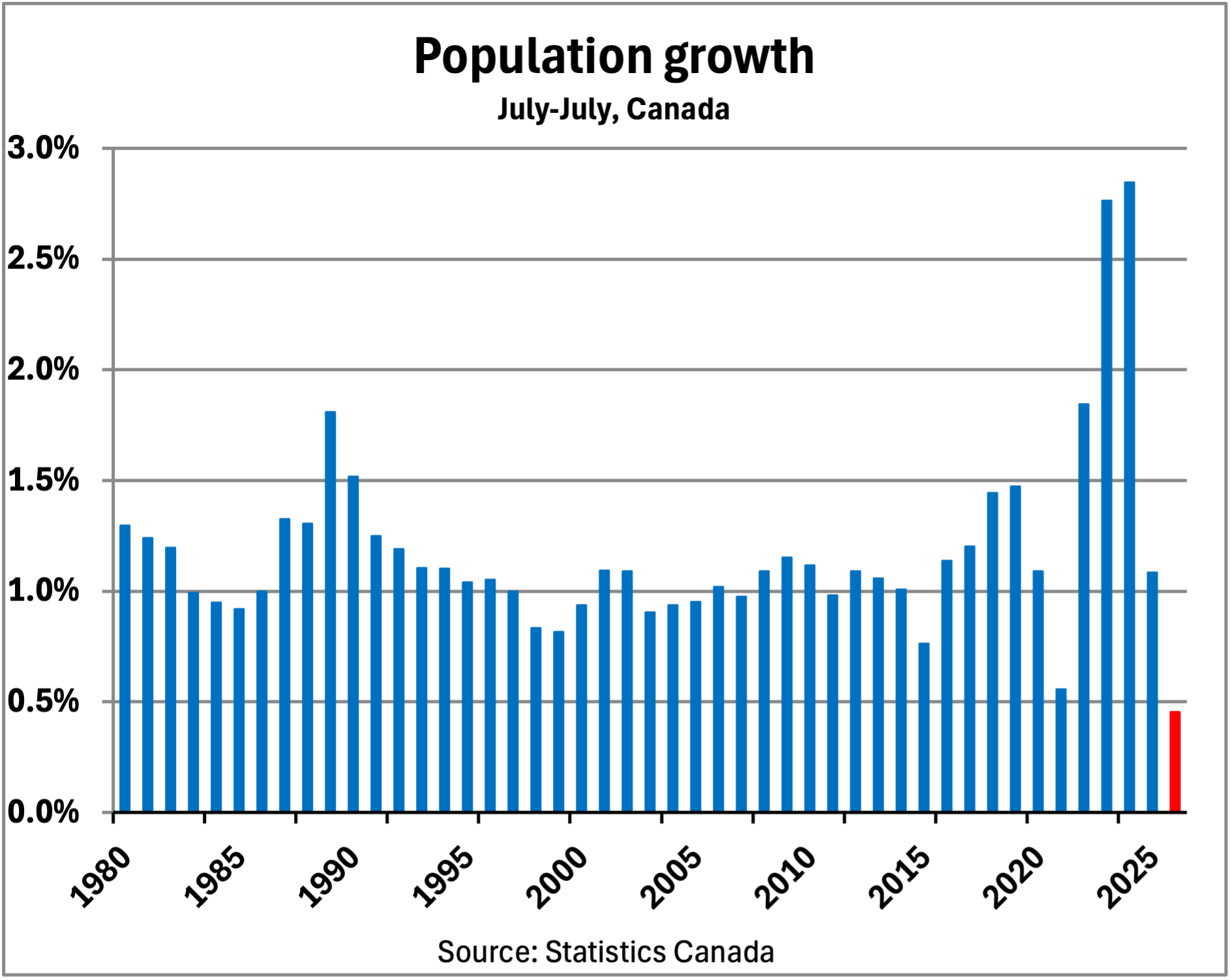
But before anyone gets too excited about a renewed population boom, there’s a catch: Even after this massive upward revision, Canada is experiencing its slowest annual population growth in more than a century.
And there are good reasons to believe this demographic hangover could last for years.
The great statistical disappearing act
Let’s start with the numbers, because they’re pretty remarkable.
Previous estimates suggested Canada’s population was actually shrinking on a year-over-year basis for the first time in recorded history.
Not anymore!
Statistics Canada has revised first-quarter population growth from a decline of 200,000 people (-0.5%) to an increase of 200,000 (+0.5%)….not exactly a rounding error for a country of just over 40 million.
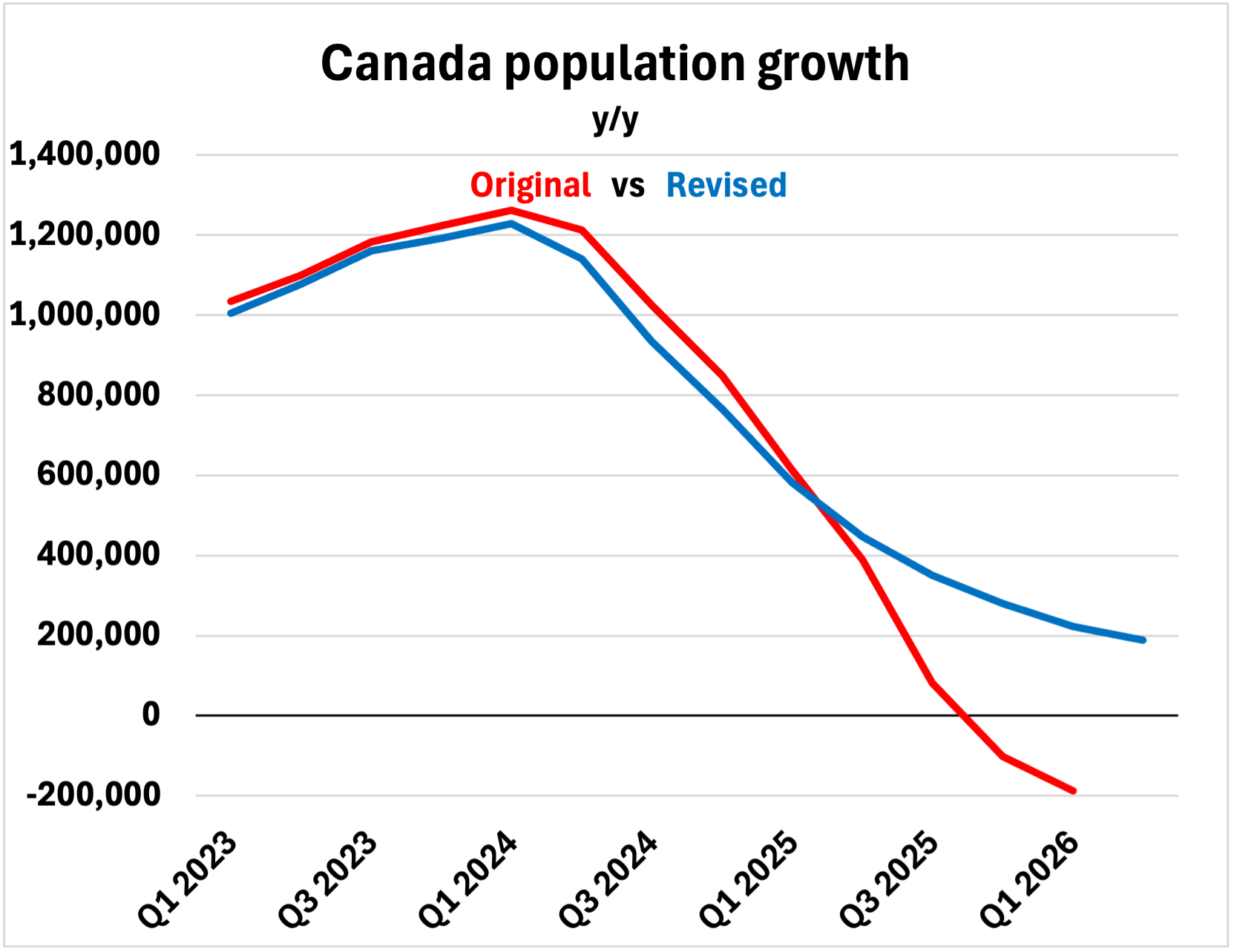
But here’s the important part: Despite this statistical resurrection, Canada’s population is hardly booming.
Through mid-year, annual population growth was still the weakest since 1915.
Apparently, “temporary” doesn’t mean what we thought it meant
What happened?
Statistics Canada had overestimated how many non-permanent residents—people here on temporary permits or in the asylum process—had departed.
Many had applied to extend their status and were still legally in Canada while those applications were processed. In other words, they were in statistical “limbo”…the spreadsheet had them leaving but in actuality they were awaiting a decision on whether they can stay.
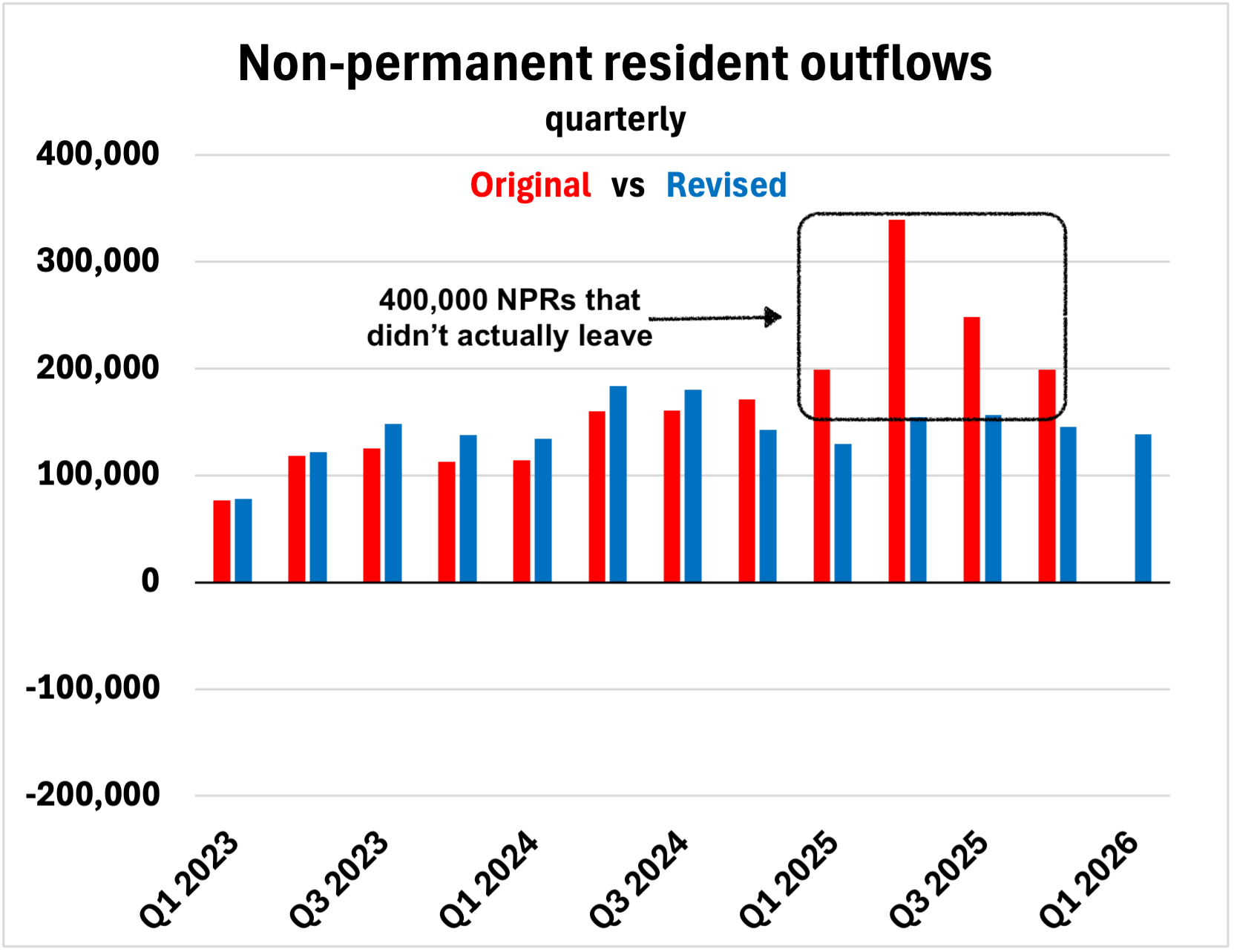
It’s a rather embarrassing oversight, and it doesn’t exactly inspire confidence in Canada’s ability to track who’s actually living within its borders.
But I’ll save that particular can of worms for my next post.

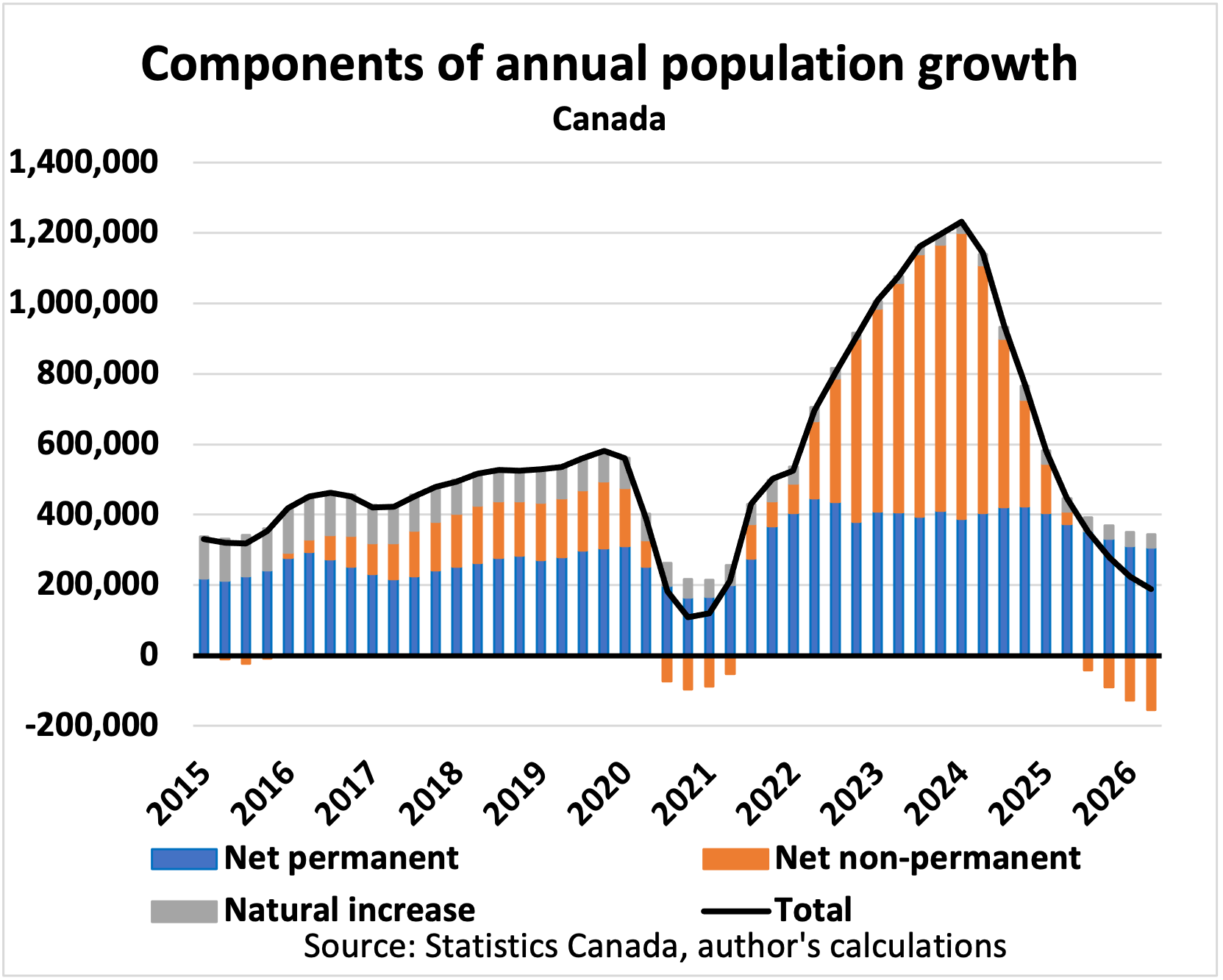
For now, the important distinction is that Canada’s temporary-resident population is still shrinking. Just not nearly as quickly as we previously thought.
The latest revisions show that this cohort declined by roughly 155,000 people year over year, rather than the previously reported 524,000.
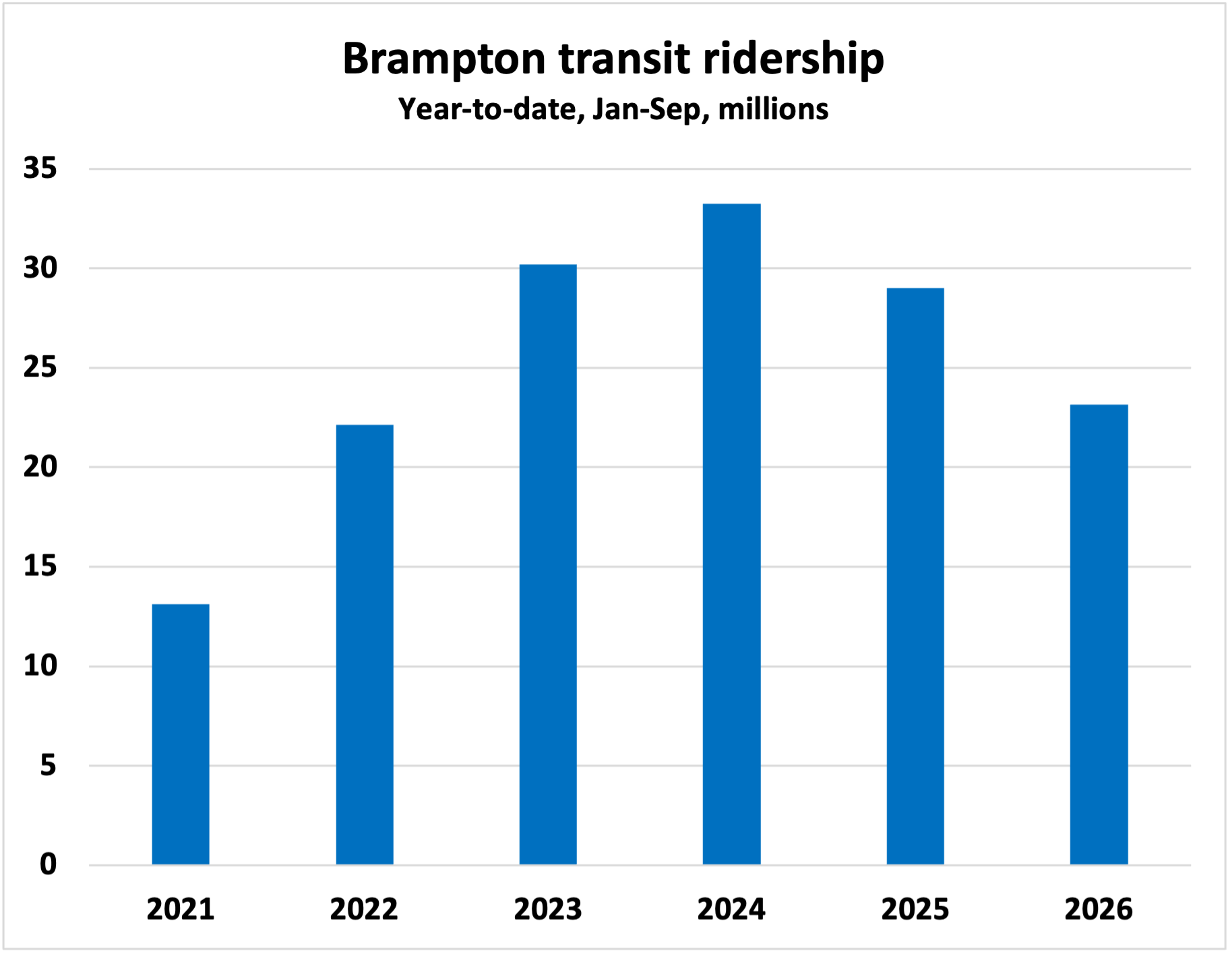
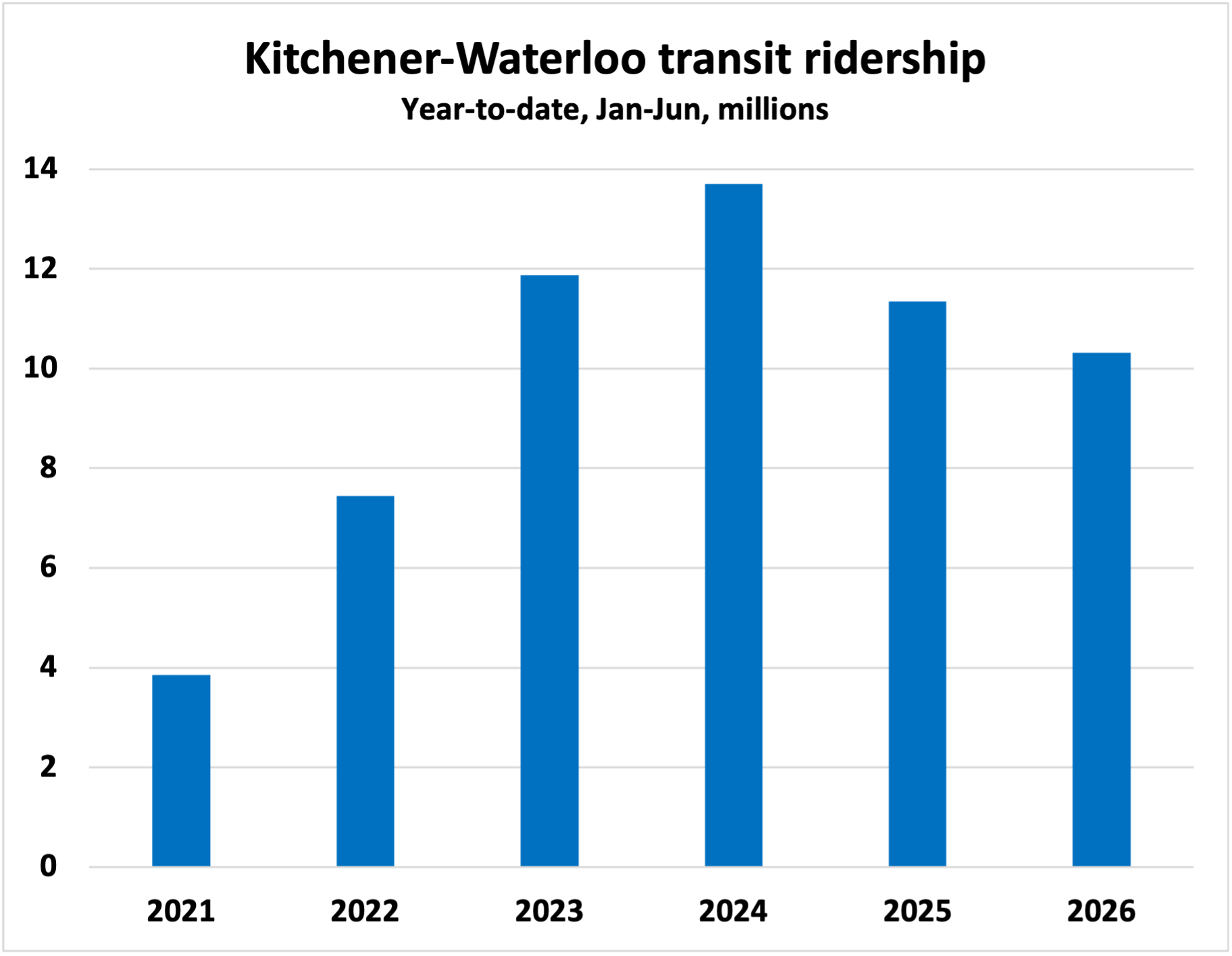
And if you’re skeptical that temporary-resident numbers are declining at all, consider the recent transit ridership data from Brampton and Kitchener-Waterloo.
Both regions experienced enormous inflows of international students and temporary workers during the boom years. Both are now seeing striking declines in transit ridership.
Ottawa has a VERY long way to go
To understand why this matters, we need to appreciate just how spectacularly Canada’s temporary-resident population expanded.
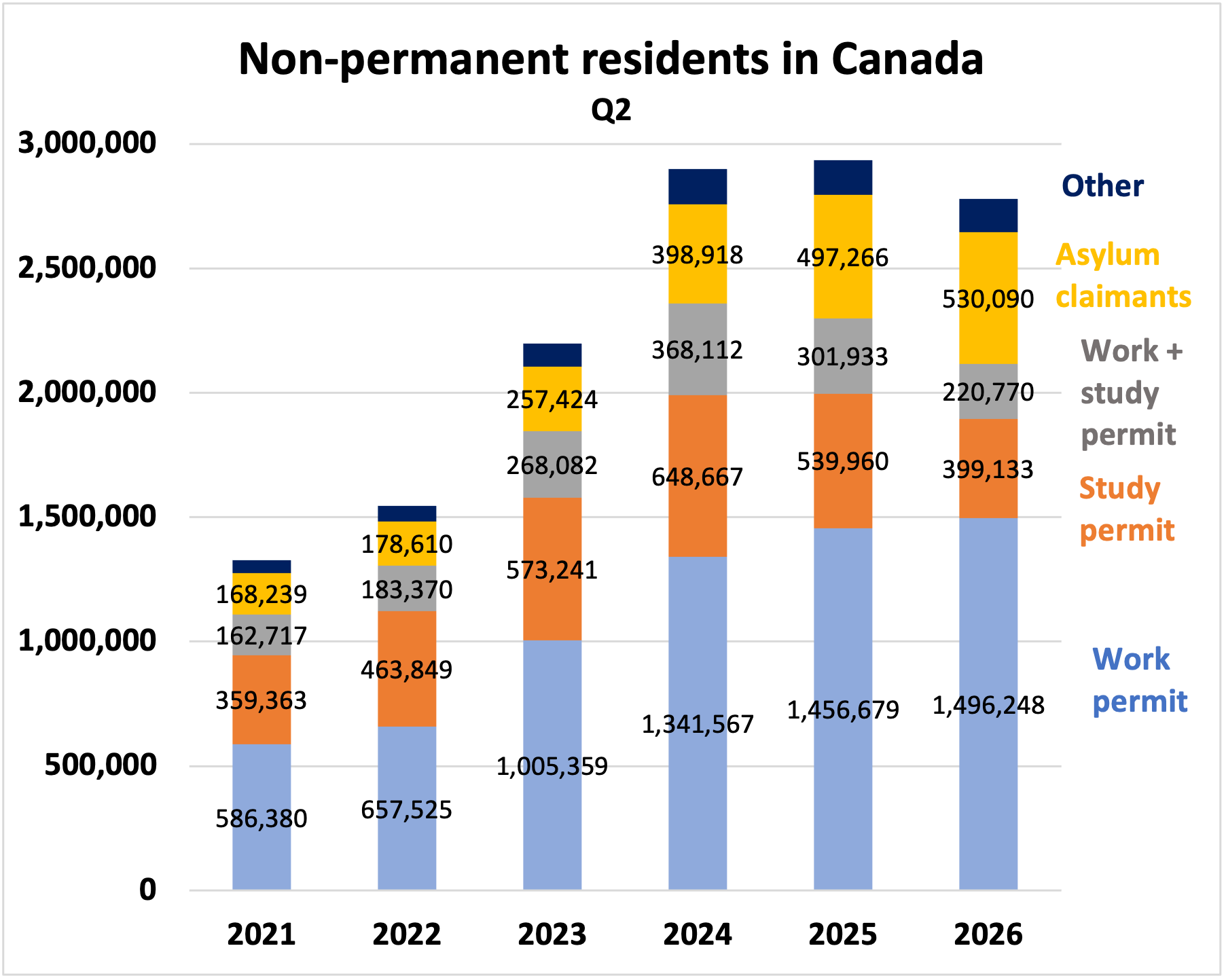
Between 2021 and 2025, the number of non-permanent residents surged from approximately 1.4 million to 2.9 million.
That’s more than a doubling in just four years.
Let’s call a spade a spade: This was a monumental policy failure.
Canada dramatically expanded temporary migration without adequate planning for housing, infrastructure, or the integrity of the programs themselves. Along the way, serious vulnerabilities to fraud and abuse emerged in what had once been one of the world’s most respected immigration systems.
More on that next time.
For now, the problem is that Ottawa has committed to reducing the temporary-resident population to less than 5% of Canada’s total population by the end of 2027.
Before the revisions, we thought temporary residents accounted for 6.1% of the population.
Now we know it’s closer to 6.7%, or approximately 2.8 million people.
That’s a pretty significant difference when you’re trying to hit a target.
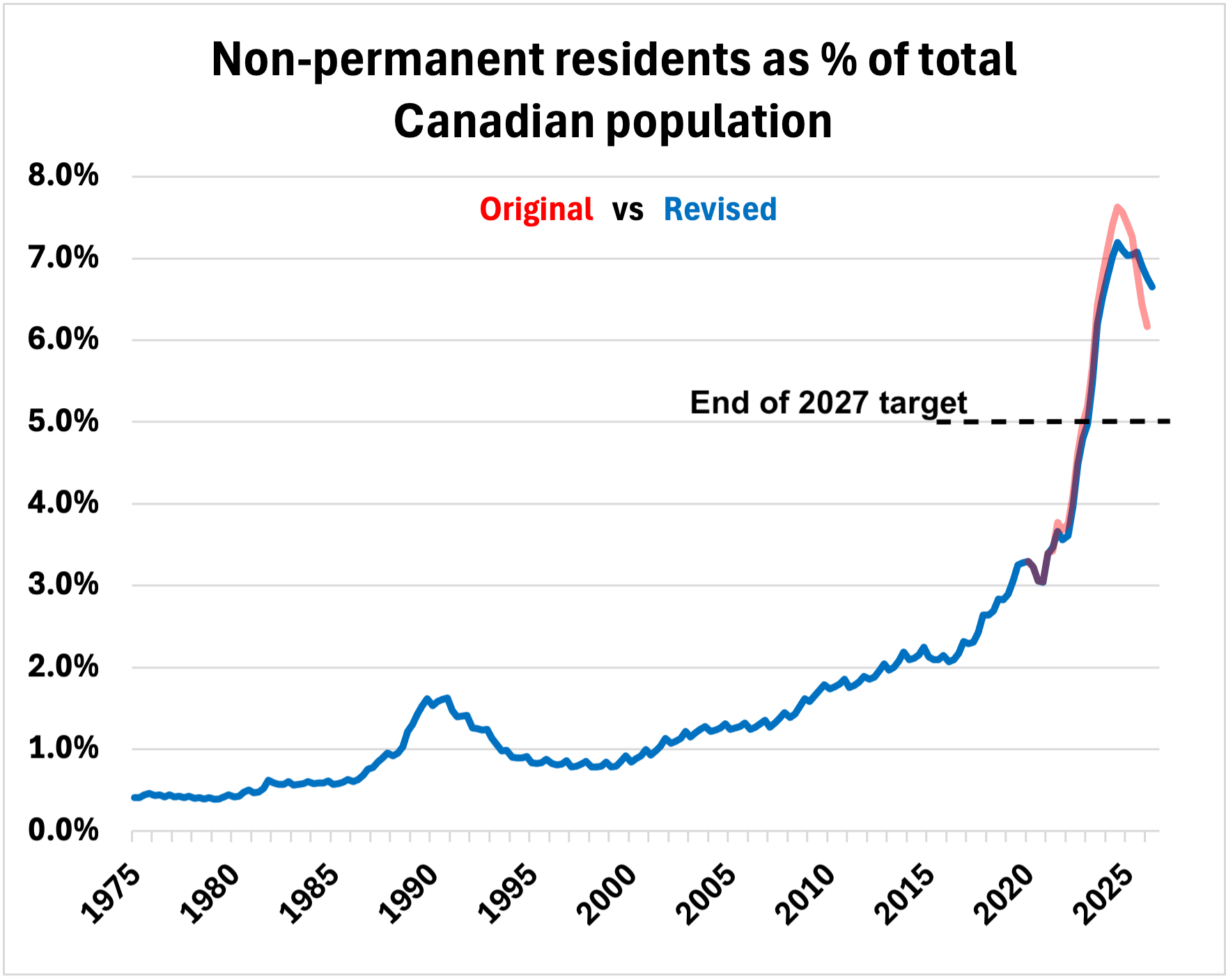
To get below 5%, Ottawa would need to reduce the temporary-resident population by something on the order of another 700,000 people, assuming the overall population doesn’t change dramatically.
That’s an enormous undertaking with just over a year remaining.
And it raises some rather awkward questions.
How exactly will Ottawa accomplish this? How many people will voluntarily leave? How many will transition to permanent residency? And what happens when temporary permits expire and people don’t leave?
These are questions that deserve serious answers, particularly before anyone starts talking about reopening the immigration taps.
Which brings us to the really interesting part of this story.
Why population growth will be “lower for longer”
Here’s something that tends to get lost in the immigration debate.
When politicians talk about immigration targets, they’re usually referring to permanent-resident admissions.
Those targets were reduced in 2025 after years of rapid increases. But several supposedly “one-time” initiatives announced in the latest federal budget effectively push actual admissions back toward their previous peaks.
So when Prime Minister Mark Carney talks about potentially increasing permanent-resident targets, someone in the media ought to point out that we haven’t really reduced admissions at all.
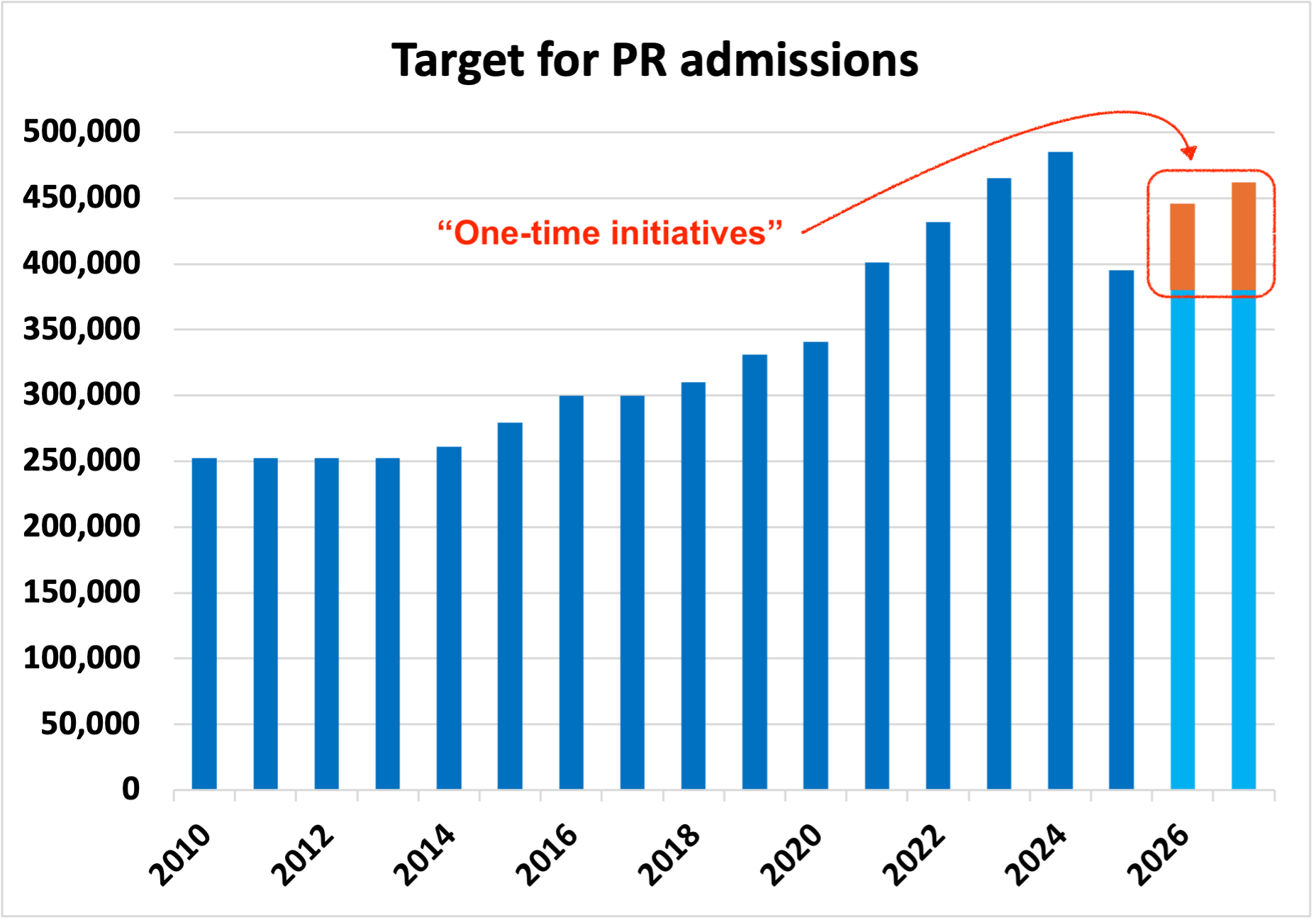
Most Canadians probably assume that admitting 500,000 permanent residents means 500,000 new people arriving in Canada.
A perfectly reasonable assumption, but very wrong.
Canada has used a points-based immigration selection system since the 1960s, and today’s system places significant value on Canadian work experience and education.
That creates an enormous advantage for people who are already living here on temporary permits.
This isn’t theoretical….it’s already showing up in the data.
Between 2010 and 2020, roughly one-third of new permanent residents were people already living in Canada.
So far in 2026, that share is approaching 60%. I wouldn’t be surprised if it eventually approaches 70% during this cycle.
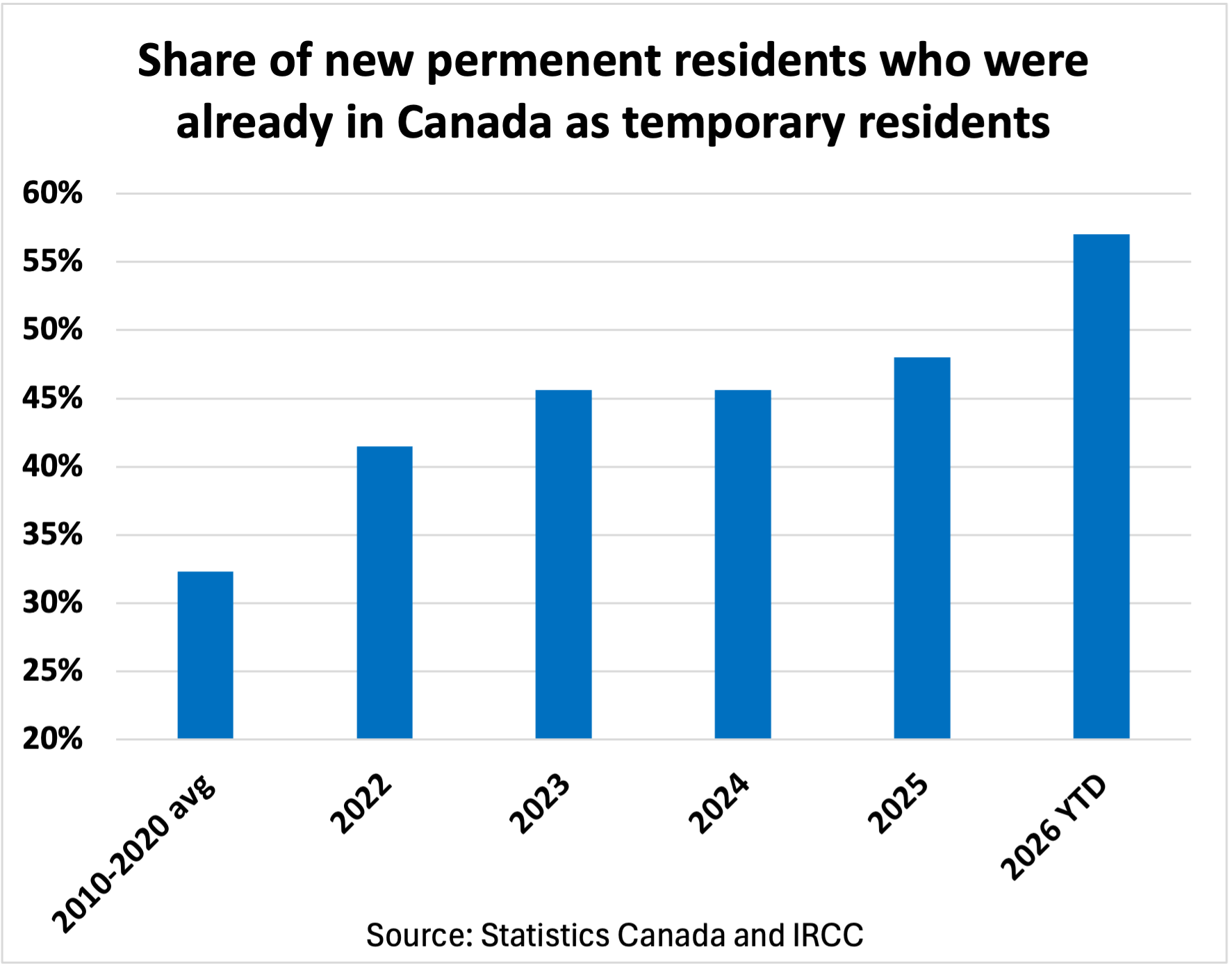
Think about what that means.
A growing share of Canada’s permanent-resident admissions isn’t actually adding anyone to the population. It’s simply changing their immigration status.
That means a 500,000 PR target back in 2020 would lead to a roughly 335,000 increase in population.
Today that same 500,000 target would see only 215,000 people added to the population, and it’s likely to fall to 150,000 in coming years if I’m right.
We’ve seen this movie before
There’s a historical precedent worth considering.
Canada experienced a surge in temporary residents in the late 1980s, followed by a prolonged period of unusually weak population growth. History doesn’t repeat itself, but the mechanics certainly look familiar.
Between 1986 and 1989, the number of non-permanent residents in Canada more than tripled. Over the following five years, that population was cut in half.
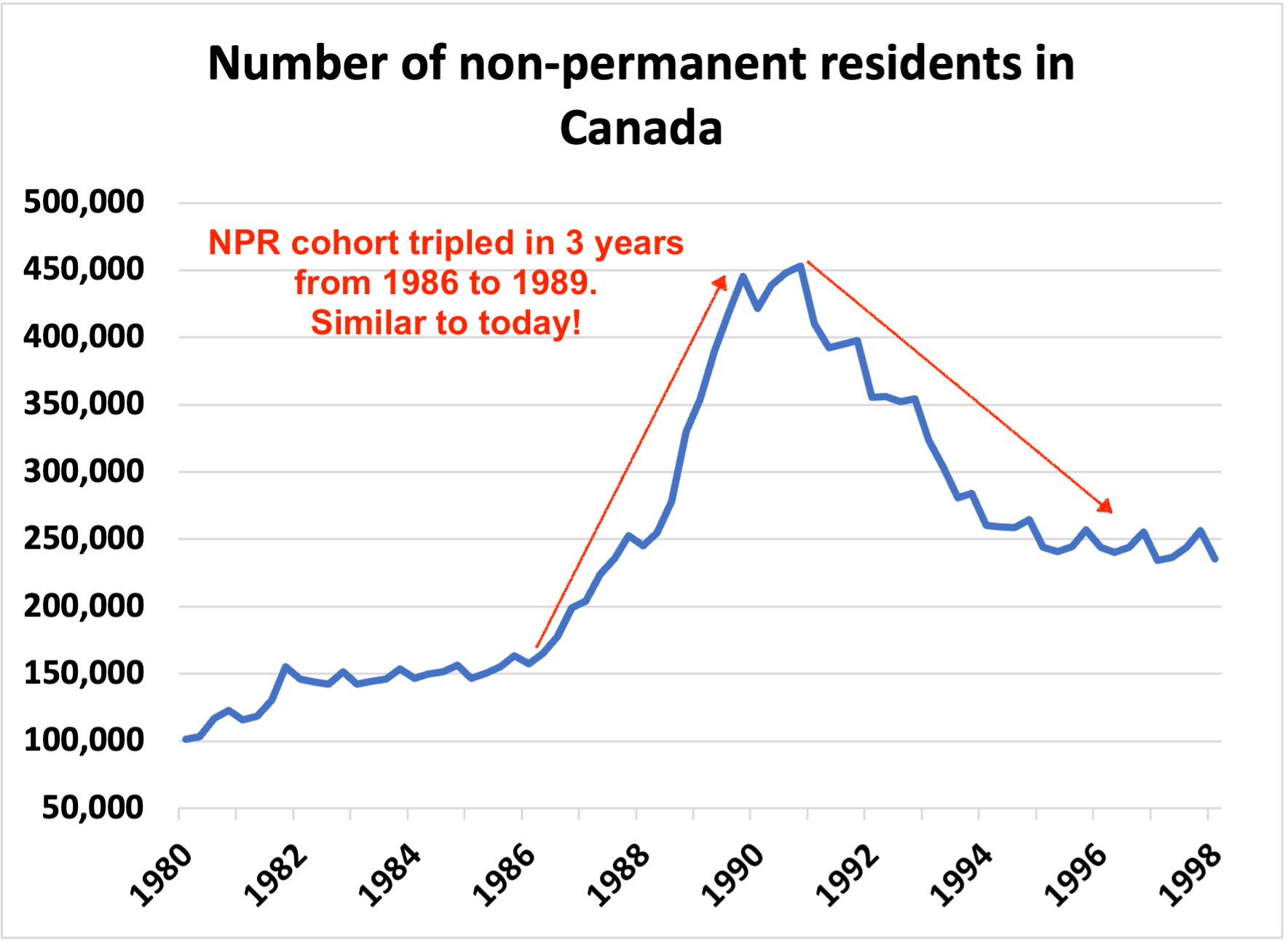
So where did everyone go?
Some left the country. But many simply transitioned to permanent residency. They were counted as new permanent residents despite already living in Canada.
The result? A growing share of Canada’s immigration admissions consisted of people who were already here, contributing to a prolonged slowdown in population growth throughout the 1990s.
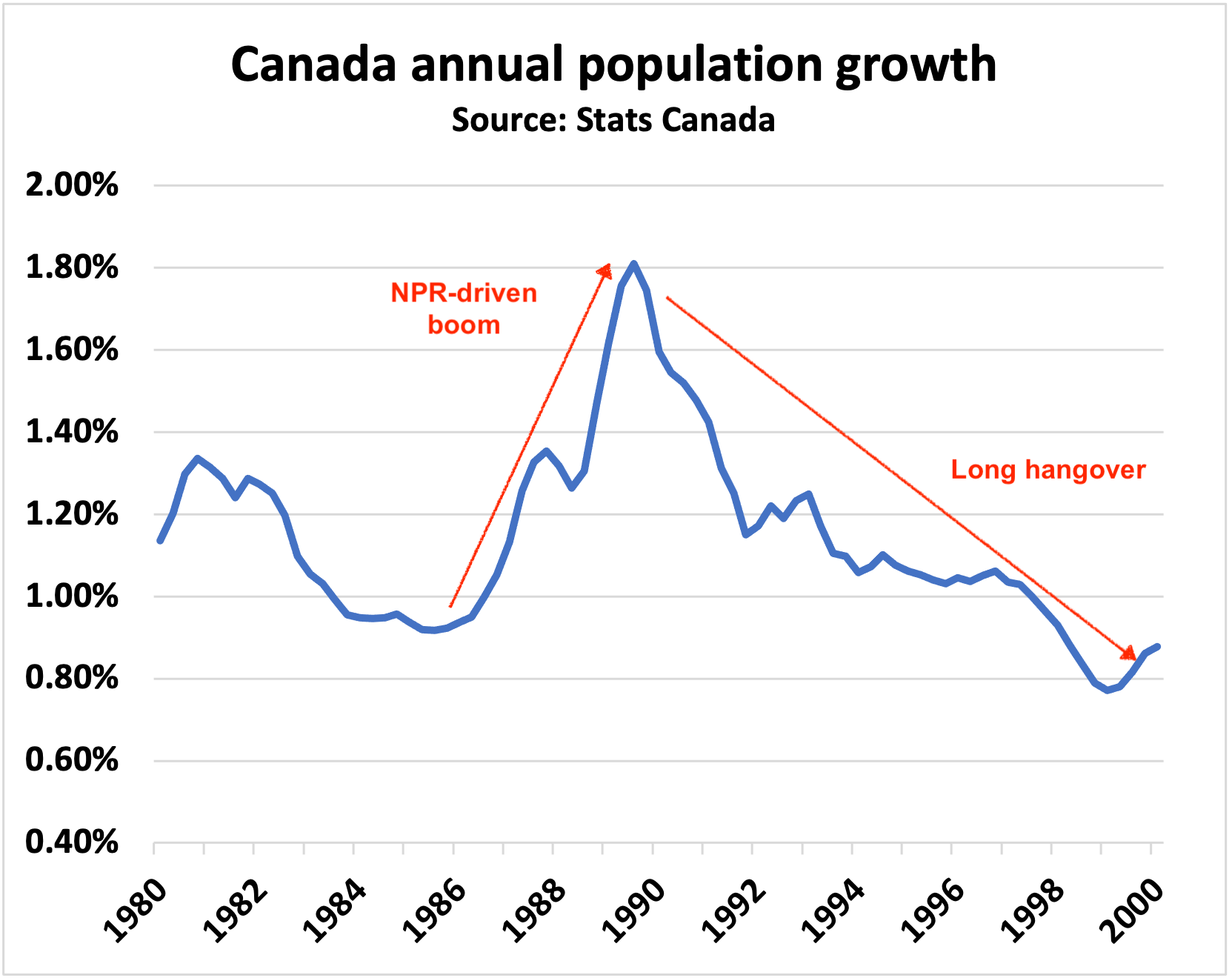
Now consider that today’s temporary-resident boom absolutely dwarfs anything we experienced in the 1980s.
That’s why I think there’s a compelling case that Canada is entering a prolonged period of unusually weak population growth.
Not necessarily because Ottawa will keep immigration targets low, but because a growing share of those admissions will simply involve changing someone’s immigration status rather than adding another person to the population.
So don’t be surprised if population growth remains anemic for years to come, even if Ottawa decides to raise immigration targets….You can’t count the same people twice.
As for the broader implications, and a few uncomfortable questions this government should answer before reopening the immigration taps, I’ll tackle those in my next post.
-br
This has been a guest post from Loonie Hour bestie Ben Rabidoux.
You can read more of his work at www.edgeanalytics.ca”
It would be really nice for Canada to put its own citizens first. The amount of immigration is putting our youth in a real "failure to launch" scenario that is really not of their own making. I don't totally know what the counter argument for this policy was as I have seen next to no benefit from flooding the country with new people. The old policy worked so well, I don't quite know what the impetus was to break it.